

 By
By 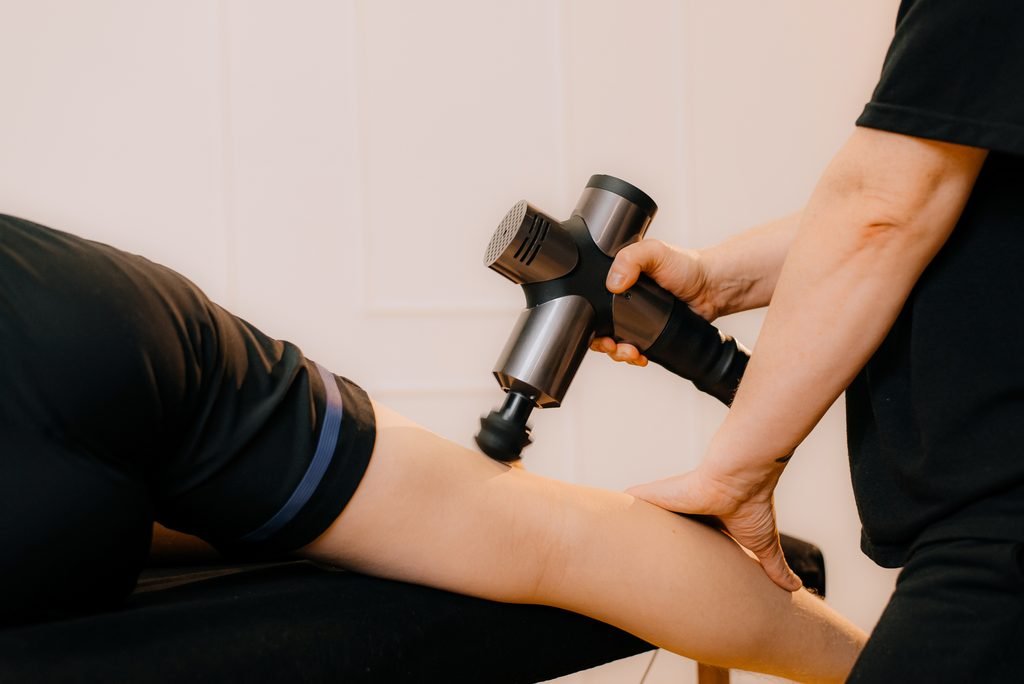
When I first began researching the Theragun Pro, I found two very different conversations about massage guns.
One positioned them as a recovery essential that any serious athlete would need, while the other dismissed them as an overpriced way of massaging sore muscles.
I think the practical answer lies somewhere in the middle.
Percussive therapy has received research attention for flexibility, soreness, muscle performance, and recovery, but the findings are mixed and the practical applications aren’t always clear.
While I enjoy how much my muscles loosen up when I use a massage gun, I’m not convinced that the Theragun Pro somehow speeds up my recovery in a lasting way.
So, I think a better question than “does the Theragun Pro work?” is: what can it realistically do, and is that worth the cost?
What Is the Theragun Pro?
The Theragun Pro is Therabody’s high-end percussive massage gun, built around deep, full-body massage.
The current U.S. version offers six massage attachments, four guided routines, app compatibility, a listed 120-minute battery life, and a multi-grip design.
These are nice touches, but they’re not the main reason I would buy one.
The real reason is percussive therapy.
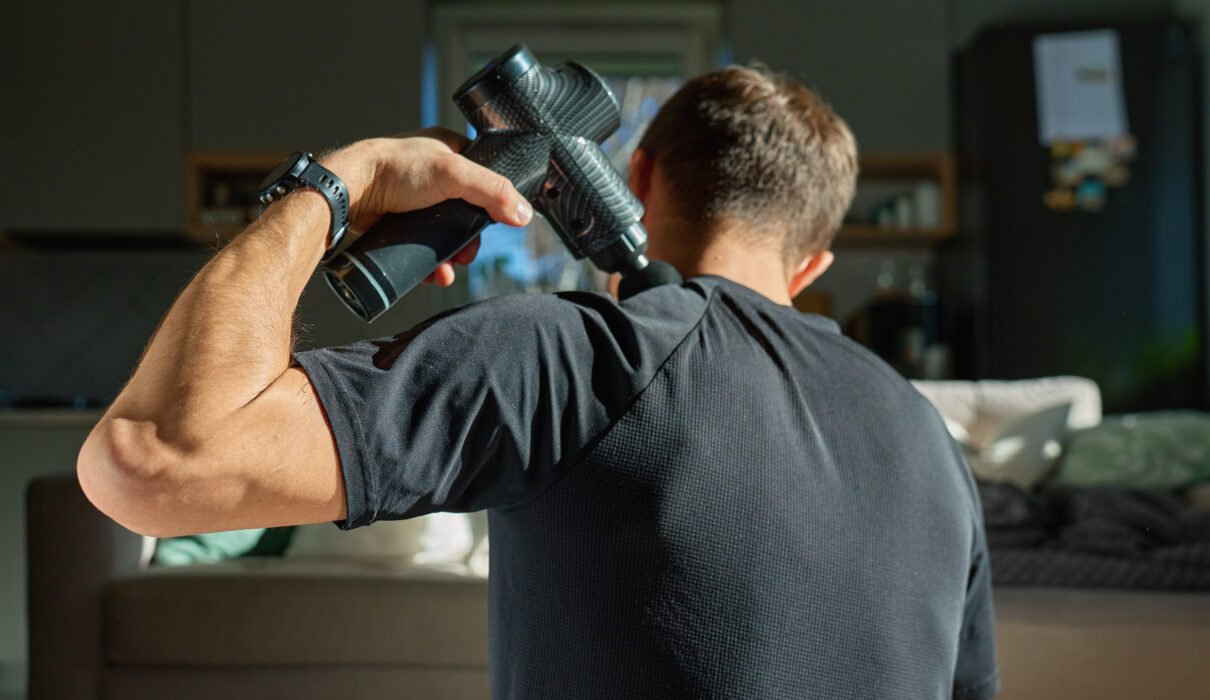
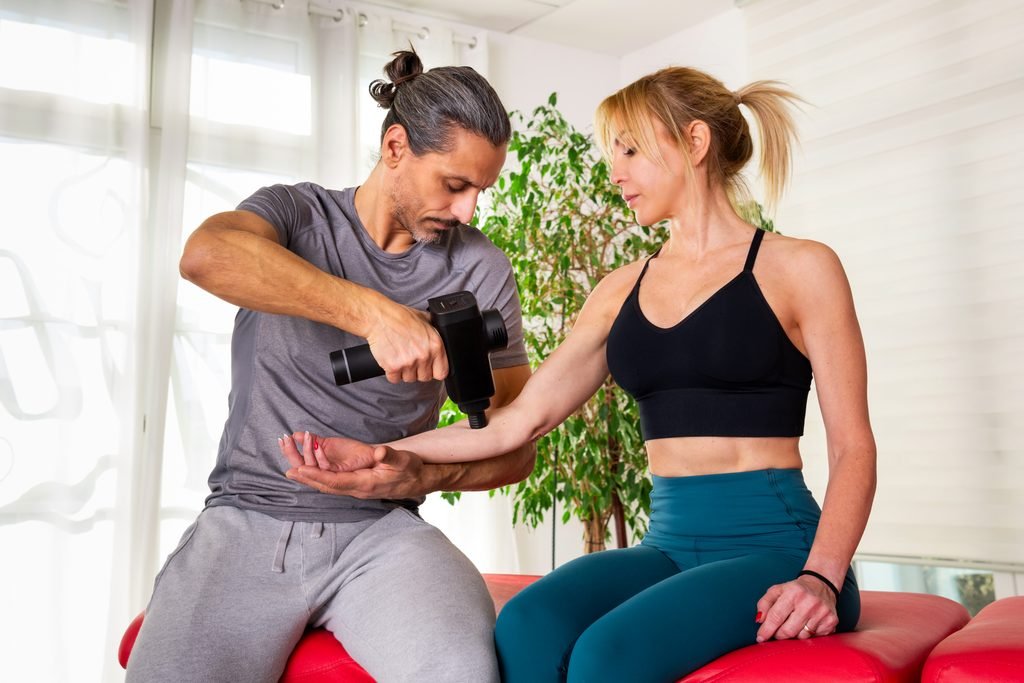
Instead of kneading my quads with my hands after leg day, the massage gun repeatedly drives an attachment against the muscle. I can move it across larger areas such as my quads, hamstrings, and glutes or target smaller areas such as my traps.
The sensation is easy enough to understand. The more interesting question is what’s happening underneath.
What Happens When You Use the Theragun Pro
Percussive therapy delivers repeated mechanical impulses to muscles and surrounding soft tissue.
After heavy squats, for example, I might move the massage gun across my quads. This can temporarily affect flexibility, stiffness, and how my muscles feel.
A 2023 systematic review looked at 13 studies of massage-gun percussive therapy and found acute improvements in flexibility and some aspects of muscle performance.
However, the researchers also highlighted limitations in the available evidence.
That’s important because immediate improvement doesn’t necessarily mean faster long-term recovery.
My legs can feel looser five minutes after using the Theragun without proving that my muscles have repaired themselves any faster.
Theragun Pro Benefits: What Does the Research Actually Say?
Range of Motion and Flexibility
This is one of the areas of massage-gun research I find most convincing.
In one Theragun study, participants received two 60-second applications to their hamstrings, and their range of motion increased by 11.4% immediately afterward.
Another study involving recreationally active adults found improvements in hip flexion and ankle dorsiflexion after a repeated massage-gun protocol.
I can see how that might be useful before certain workouts.
If my ankles or hips feel stiff before squatting, a short massage-gun session could help me feel more mobile. I would still follow it with my normal dynamic warm-up rather than treating the Theragun as the warm-up itself.
The important word is acute. An immediate increase in range of motion doesn’t necessarily mean I’ve made a permanent improvement in flexibility.
This fit with Cleveland Clinic’s guidance on massage guns which notes that these devices may improve range of motion while also being useful around warm-ups and cool-downs.
Muscle Sorenes and Recovery
This is where I would be more cautious.
A 2024 study found that percussion massage provided immediate but temporary relief from soreness after damaging eccentric exercise and helped range-of-motion recovery. It didn’t improve isometric strength recovery.
A 2026 systematic review and meta-analysis of 12 randomized trials also found that percussive therapy did not significantly improve delayed-onset muscle soreness or maximum voluntary contraction recovery compared with controls.
It found possible benefits for countermovement-jump recovery and an exercise-related blood marker, although some of the evidence had low or very low certainty.
If my legs feel better after using a Theragun Pro, that’s still useful.
I’m just not willing to say that “I feel less sore” automatically means “I’ve recovered faster.”
For a practical explanation of this kind of short-term relief, Hospital for Special Surgery’s massage gun guide explains how percussion devices may help relax and soothe tight or achy muscles while still treating them as only one part of a broader recovery approach.
Circulation and Muscle Oxygenation
Percussive massage can cause short-term physiological changes in the area being treated, and Theragun research has investigated circulation and muscle oxygenation.
Those findings sound impressive, but they need context.
Increasing circulation immediately after treatment doesn’t automatically mean I’ll build more muscle or avoid injuries.
I’m more interested in whether those physiological changes eventually improve outcomes that matter to me: soreness, mobility, strength, and training performance.
Strength and Exercise Performance
This is another area where hype can get ahead of the science.
The 2023 review found some evidence of acute improvements in muscle and explosive strength, but newer evidence complicates the picture.
The 2026 meta-analysis found a possible benefit for countermovement-jump recovery but no significant improvement in maximum voluntary contraction recovery.
So I wouldn’t use a Theragun Pro expecting it to increase my strength or power.
If it helps me feel comfortable and prepared to train, great. Actual improvements in muscle and strength still have to come from training.
Cleveland Clinic makes a similar distinction in its discussion of what massage guns can not do noting that these devices haven’t been proven to improve speed, power, or endurance even though range of motion and perceived fatigue may improve.
Feeling Better Versus Recovering Faster
This distinction changed how I think about recovery tools.
Let’s say I complete a hard lower-body workout on Monday. On Tuesday, my quads are stiff and sore. I use the Theragun Pro for a few minutes and immediately feel better.
Nice.
But that doesn’t necessarily mean my muscle tissue repaired faster.
Subjective recovery includes soreness, stiffness, and how ready I feel. Physiological recovery involves things such as restoring performance after the demands of training.
They can overlap, but they’re not the same.
That’s why I see the Theragun Pro as a useful tool rather than the foundation of recovery.
Sleep, smart training volume, nutrition, hydration, and enough time between demanding workouts still matter whether I own an expensive massage gun or not.
Where the Theragun Pro Fits Into My Training
Before a Workout
Before training, I want to feel prepared and mobile rather than deeply relaxed.
If I’m training legs, I might briefly use the Theragun on my quads, hamstrings, glutes, and calves before doing my regular warm-up.
I wouldn’t spend 20 minutes intensely working on one muscle.
The research on short-term range of motion makes brief use more interesting to me as part of a warm-up, not as a replacement for one.
After a Workout
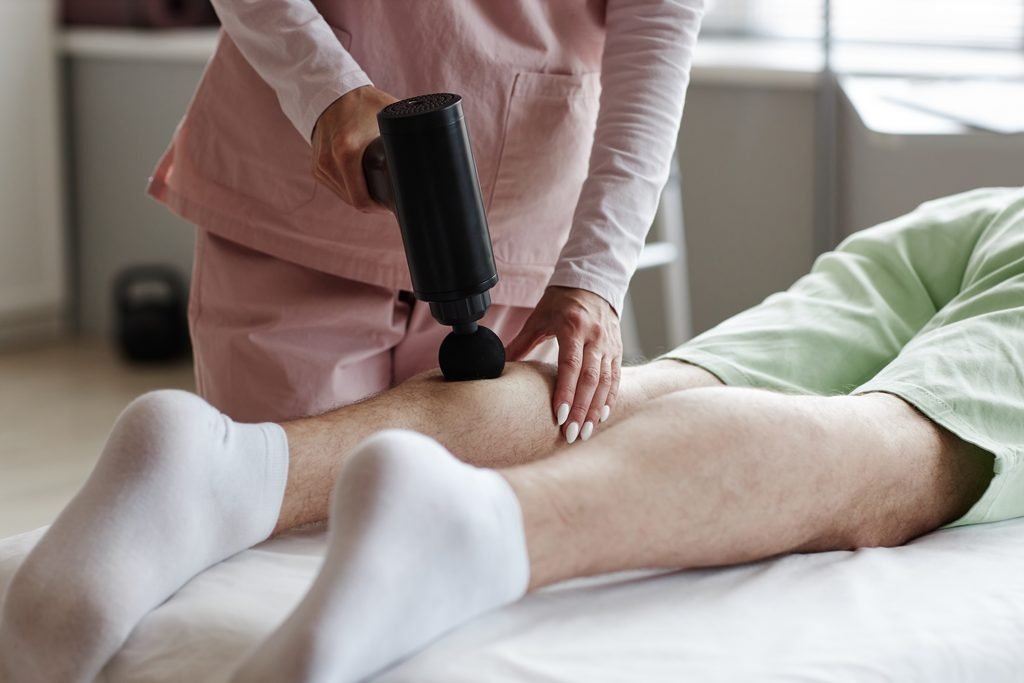
After training, I’d target the muscles I worked using a pressure level that feels comfortable.
More pressure doesn’t automatically mean better recovery.
After squats and lunges, for example, I want comfortable, consistent percussion across my quads, not a test of how much pressure I can tolerates.
On Rest Days
On rest days, I’d use it when I actually have a reason.
If my calves feel stiff after running or my legs feel uncomfortable after a demanding week, a brief massage might help.
I wouldn’t turn it into a compulsory daily ritual just because I own the device.
Who Is the Theragun Pro Actually For?
To me, the Pro makes the most sense for someone who already knows they use percussive massage regularly.
That could be a recreational lifter training four or five times per week, a runner dealing with regular lower-body stiffness, an athlete with demanding training needs, or a trainer who frequently uses a massage gun.
Features such as Therabody’s triangular multi-grip design and adjustable positioning may also be useful if I regularly need to reach awkward areas.
Who Probably Does not Need a Theragun Pro?
Being serious about fitness doesn’t automatically mean I need premium recovery equipment.
If I train two or three times per week and rarely use massage tools, the Pro could be more device than I need.
I’d be even more cautious as a beginner. If I haven’t established a consistent resistance-training routine, appropriate nutrition, and basic recovery habits, I wouldn’t make a premium massage gun my first investment.
Recovery tools should support good fitness habits, not become the center of them.
That’s also consistent with Hospital for Special Surgery’s buying advice, which points out that users don’t necessarily need a top-of-the-line massage gun or need to spend hundreds of dollars to get a useful device.
Theragun Pro vs Cheaper Massage Guns
What Am I Paying For?
The Pro is positioned as a premium Therabody product, so I expect more than basic vibration.
The current model includes multiple attachment heads, a triangular multi-grip design, guided routines, app compatibility, substantial percussion, and a listed 120-minute battery runtime.
I can see why those features appeal to someone who uses percussion frequently.
Still, price alone doesn’t make a massage gun good or bad for my needs.
The question I would ask is:
Would I actually use the features I’m paying extra for?
If I only want a few minutes of massage after an occasional workout, probably not.
If I’m a regular percussion user who values the attachments, ergonomics, power, and guided routines, the Pro becomes easier to justify.
6 Common Theragun Pro Mistakes to Avoid
1. Assuming More Pressure Means Better Results
It’s easy to assume stronger percussion means better therapy.
I’d start with comfortable pressure. Pain isn’t evidence that the treatment is working better.
2. Staying in One Spot Too Long
I wouldn’t repeatedly work the same small area simply because it feels tight.
I’d follow the recommended routines and move the device appropriately across the muscle.
3. Using It Directly Over Bones
Percussive massage is intended primarily for soft tissue. I wouldn’t repeatedly drive the device directly over bones or other sensitive areas.
4. Treating an Injury Like Normal Soreness
Post-workout muscle soreness and acute or unexplained pain aren’t the same thing.
I wouldn’t try to treat an injury with a massage gun simply because the painful area is close to a muscle.
5. Replacing My Warm-Up With a Massage Gun
Even if percussion temporarily improves range of motion, it doesn’t replace an active warm-up.
Before squatting, I still want to prepare for squatting—not massage my legs and immediately jump into a heavy working set.
6. Expecting It to Fix Poor Recovery Habits
A massage gun isn’t going to compensate for inadequate sleep, poor nutrition, or repeatedly training beyond what I can recover from.
Is the Theragun Pro Safe?
Percussive therapy can be straightforward when used according to the instructions, but there are situations where I’d be more careful.
Therabody’s precautions include circumstances such as controlled hypertension, osteoporosis or osteopenia, pregnancy, diabetes, varicose veins, abnormal sensation, pressure sensitivity, and recent injury or surgery.
I wouldn’t automatically assume the Theragun Pro is appropriate in those situations.
If I had a relevant medical condition, injury, recent surgery, or unexplained pain, I’d seek appropriate professional guidance before using it.
And if using the Theragun made my symptoms worse, I’d stop.
For an independent safety reference, Healthline’s medically reviewed massage gun guide recommends avoiding excessive pressure and sensitive or bony areas and advises people with certain injuries or health conditions to speak with a healthcare professional before use.
How I Would Decide if the Theragun Pro Is Helping
Instead of judging it by how powerful it feels, I’d look at outcomes that actually matter:
- Does it make me feel less stiff?
- Does my range of motion improve?
- Do I move more comfortably during my warm-up?
- Does it provide useful temporary relief after hard training?
- Am I using it enough to justify the purchase?
- Does it fit easily into my training routine?
I also wouldn’t credit the Theragun for every improvement.
If I simultaneously start sleeping more, eating better, reducing excessive training volume, and using a massage gun, I can’t reasonably attribute all my improved recovery to one device.
Is the Theragun Pro Worth It?
Depending on the person, yes or no.
I’d seriously consider it if I trained regularly, already enjoyed percussive massage, wanted a powerful device, and knew I’d use it frequently enough to justify the cost.
I wouldn’t rush to buy it if I exercised occasionally and simply wanted relief from soreness now and then. A cheaper massage gun or another recovery method might meet that need.
For beginners expecting dramatic changes, I don’t think the Pro should be a priority.
For people who already know they’ll use it regularly, the decision makes much more sense.
My Final “Boring” Thoughts
Looking at the research as a whole, I don’t think the Theragun Pro is either a magic recovery device or a useless gadget.
Its value comes down to practical use.
Massage-gun percussion appears capable of producing short-term improvements in range of motion and may help with certain aspects of recovery and comfort.
That doesn’t mean it eliminates soreness or dramatically accelerates every part of recovery.
If the Theragun Pro makes training and recovery more comfortable for me and I use it regularly, I can see the value.
But I would still build my recovery around the fundamentals: sensible training, adequate sleep, good nutrition, hydration, and enough time to recover.
The Theragun Pro can support those habits. It doesn’t replace them.
