 By
By 
A kettlebell is one of the most effective pieces of equipment for building strength, improving fitness, and training your entire body with minimal space.
Unlike many gym machines that focus on one muscle group at a time, kettlebell exercises require multiple muscles to work together. A single kettlebell can help you train your:
- Legs
- Core
- Back
- Shoulders
- Arms
- Grip strength
Whether your goal is building muscle, losing fat, improving endurance, or creating a home workout routine, kettlebell training can be a practical and efficient option.
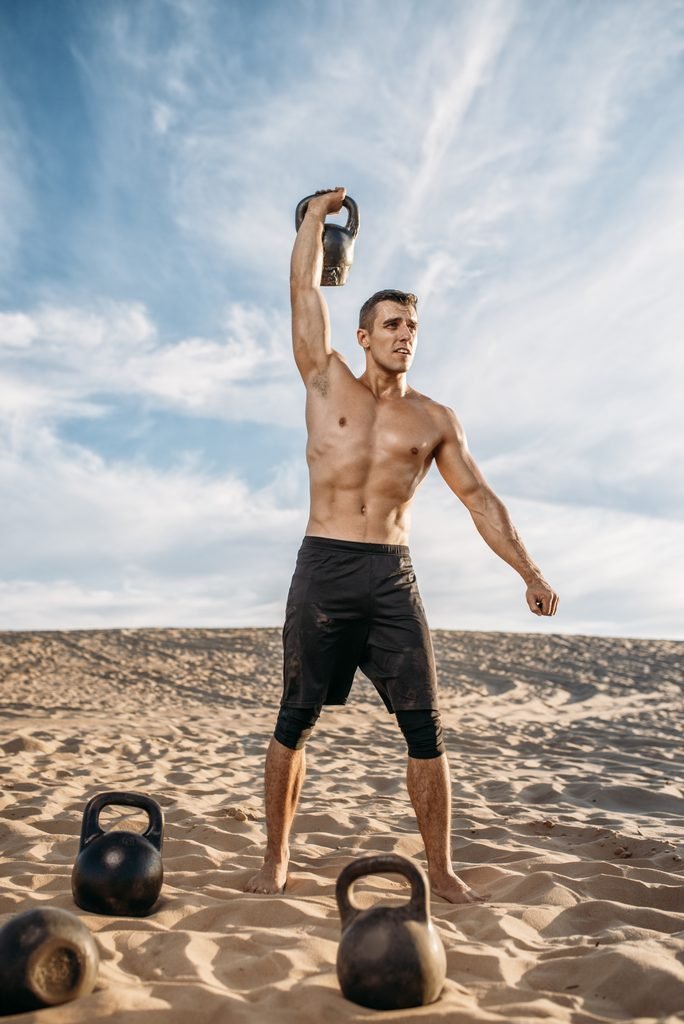
Benefits of Full-Body Kettlebell Training
Builds Functional Strength
One of the biggest advantages of kettlebell training is that it focuses on natural movement patterns such as:
- Squatting
- Hinging
- Pulling
- Carrying
- Pressing
Instead of isolating one muscle, kettlebell exercises train your body to work as a complete unit.
A full-body kettlebell workout can help strengthen:
- Glutes and legs
- Core muscles
- Back
- Shoulders
- Arms
- Grip
This type of training can improve not only your gym performance but also everyday movements like lifting, carrying, and maintaining balance.
Improves Cardiovascular Fitness
Many people think strength training and cardio are completely separate, but kettlebell workouts combine both.
Exercises like:
- Kettlebell swings
- Squats
- Clean and presses
challenge your muscles while increasing your heart rate.
This means you can improve strength and conditioning in the same workout without spending long hours on traditional cardio machines.
Helps Burn Calories and Support Fat Loss
Kettlebell workouts are effective because they often involve several large muscle groups at the same time.
For example, a kettlebell swing works your hips, legs, core, and upper body in one movement. Because more muscles are involved, your body requires more energy compared with many isolation exercises.
High-intensity kettlebell circuits can help improve strength, endurance, and calorie expenditure in a shorter workout session.
However, fat loss is not caused by exercise alone. Your results also depend on other lifestyle factors, including:
- A balanced diet
- Regular physical activity
- Quality sleep
- Consistency
Kettlebell vs Dumbbell: What’s the Difference?
Both kettlebells and dumbbells are excellent tools for strength training, but they create different training experiences.
The main difference is the position of the weight.
With dumbbells, the weight is evenly balanced around your hand. With kettlebells, the weight sits below the handle, creating a different challenge for your grip, stability, and coordination.
This design makes kettlebells especially useful for dynamic exercises such as:
- Swings
- Turkish get-ups
- Farmer carries
- Clean and presses
These movements help develop power, control, and full-body coordination.
Dumbbells are often better for exercises that focus on individual muscles, such as:
- Bicep curls
- Shoulder raises
- Chest presses
Both types of equipment are useful. The better choice depends on your training goals.
If you want a workout that combines strength, movement, and conditioning, kettlebells are an excellent option.
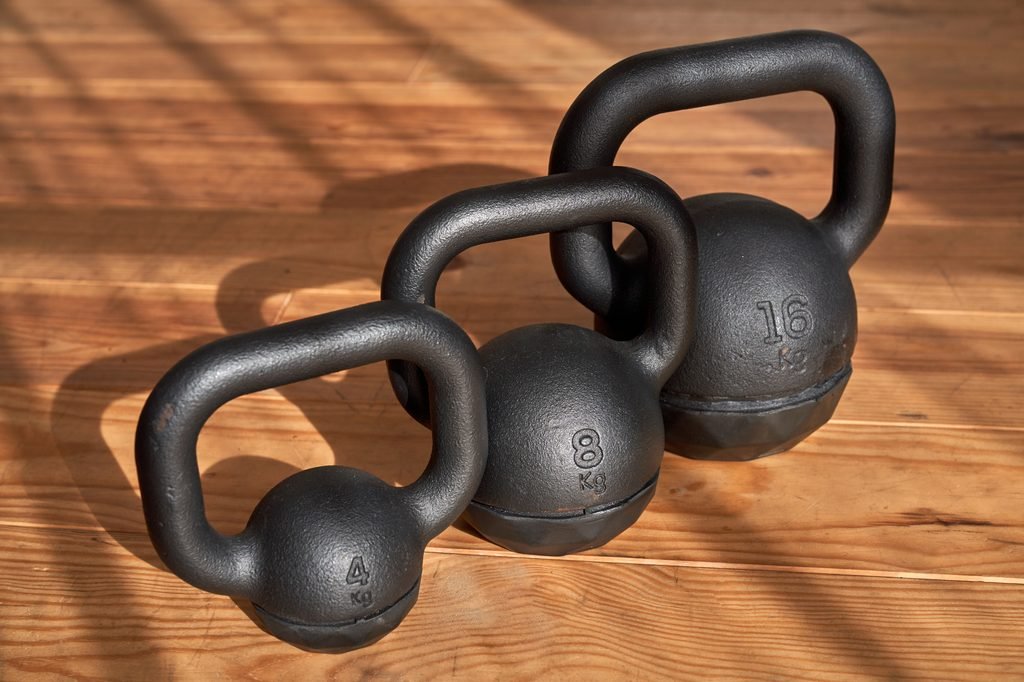
How Much Kettlebell Weight Should You Choose?
Choosing the correct kettlebell weight is important for safety and progress.
A kettlebell that is too light may not challenge you enough, while a weight that is too heavy can make it difficult to maintain proper technique.
Your starting weight depends on your:
- Fitness level
- Training experience
- Exercise selection
Beginner
Men:
12–16 kg kettlebell
Women:
8–12 kg kettlebell
Intermediate
Men:
20–24 kg kettlebell
Women:
12–16 kg kettlebell
Advanced
Experienced lifters:
28 kg or heavier
Always focus on learning proper form before increasing weight. Good technique will help you progress faster and reduce the risk of injury.
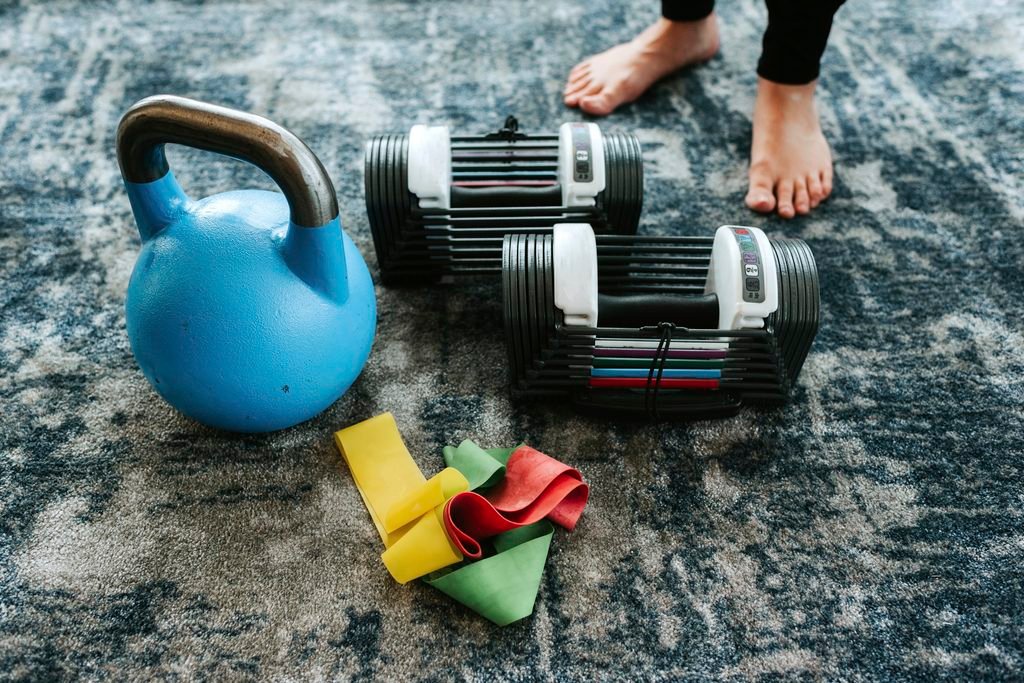
Best Full-Body Kettlebell Exercises
A good kettlebell workout does not require dozens of exercises. By mastering a few basic movements, you can build strength, improve conditioning, and train your entire body effectively.
The following exercises are some of the most useful movements for beginners and experienced lifters.
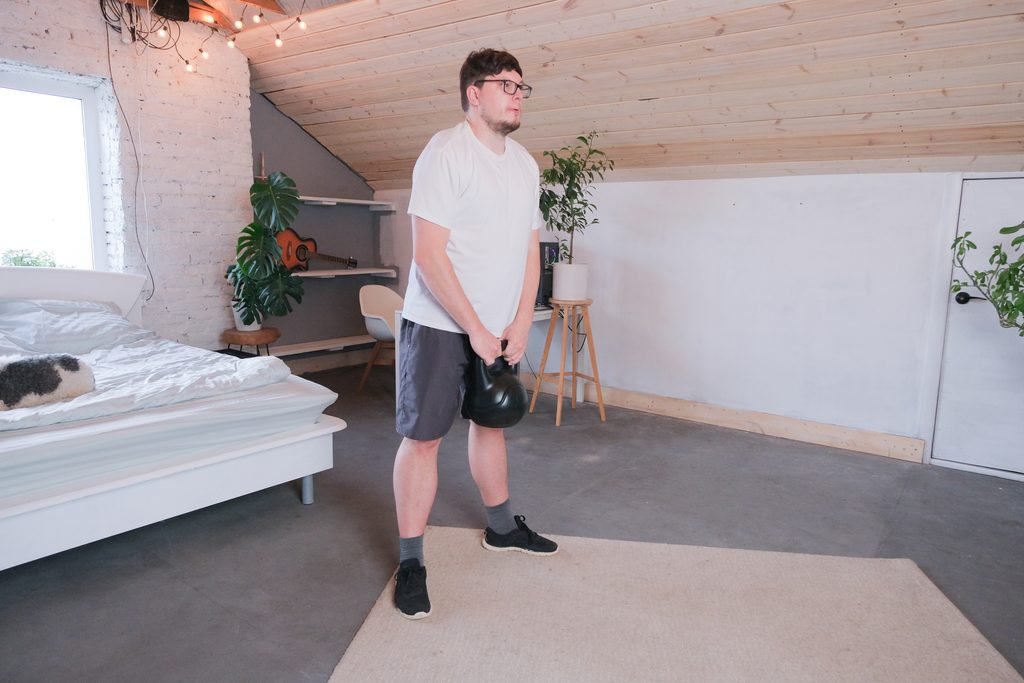
1. Kettlebell Swing
The kettlebell swing is one of the most important kettlebell exercises. It develops explosive power and strengthens the muscles responsible for hip movement.
Muscles worked:
- Glutes
- Hamstrings
- Core
- Lower back
- Shoulders
How to perform:
- Place the kettlebell between your feet.
- Push your hips backward while keeping your back straight.
- Drive your hips forward to create momentum.
- Let the kettlebell swing naturally to chest height.
- Control the movement as it returns.
Sets:
4 × 15 reps
The biggest mistake beginners make is using their arms to lift the kettlebell. The power should come from your hips and legs, not your shoulders.
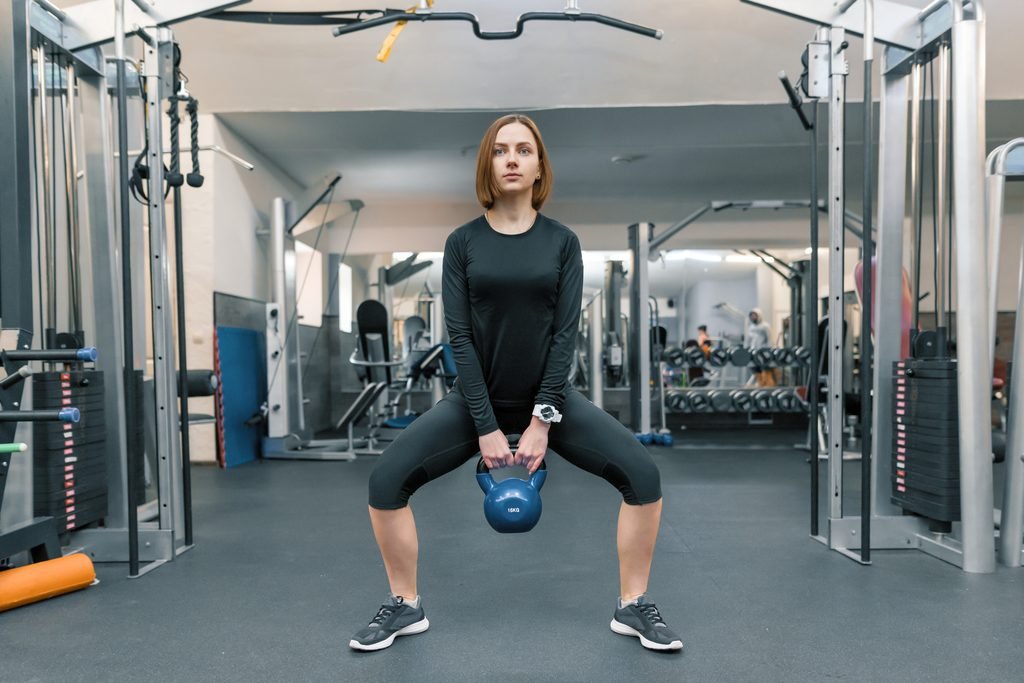
2. Kettlebell Goblet Squat
The goblet squat is a beginner-friendly exercise that builds lower-body strength while improving core stability.
Muscles worked:
- Quadriceps
- Glutes
- Core
How to perform:
- Hold the kettlebell close to your chest.
- Keep your chest up and your back straight.
- Lower into a squat position.
- Push through your feet to return to the starting position.
Sets:
3 × 10–12 reps
Focus on controlled movement rather than rushing through repetitions.
3. Kettlebell Clean and Press
The clean and press is a full-body movement that combines lower-body power with upper-body strength.
Muscles worked:
- Shoulders
- Arms
- Legs
- Core
The clean movement develops explosiveness, while the press improves shoulder strength and stability.
How to perform:
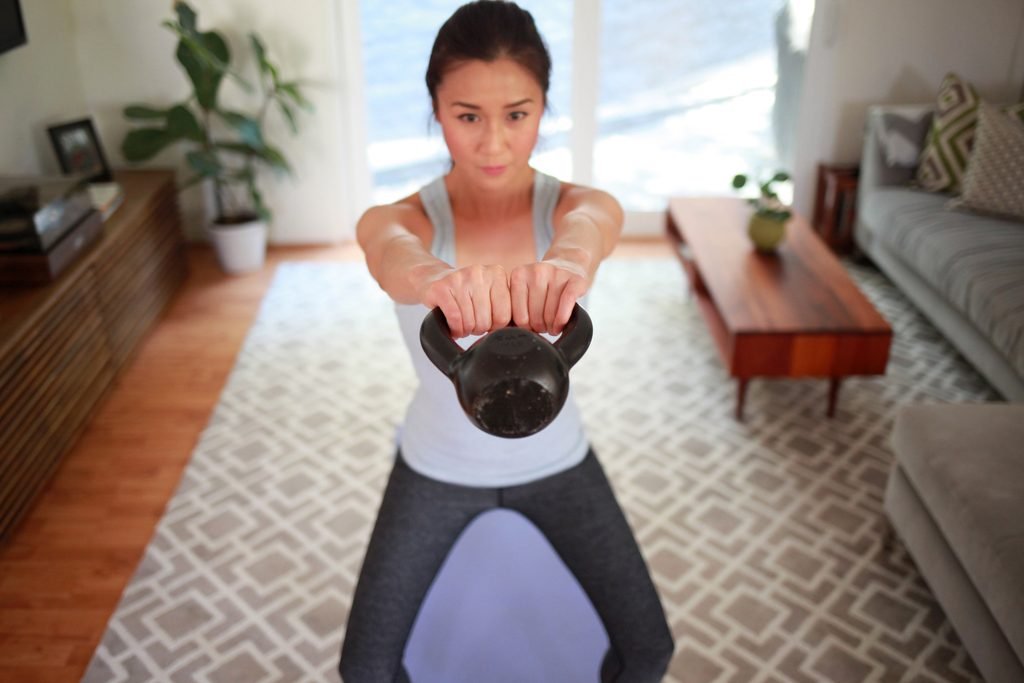
- Swing the kettlebell upward using your hips.
- Bring it into the rack position near your shoulder.
- Press the kettlebell overhead.
- Lower it down with control.
Sets:
3 × 8 reps per side
Start with a lighter weight until you feel comfortable with the movement pattern.
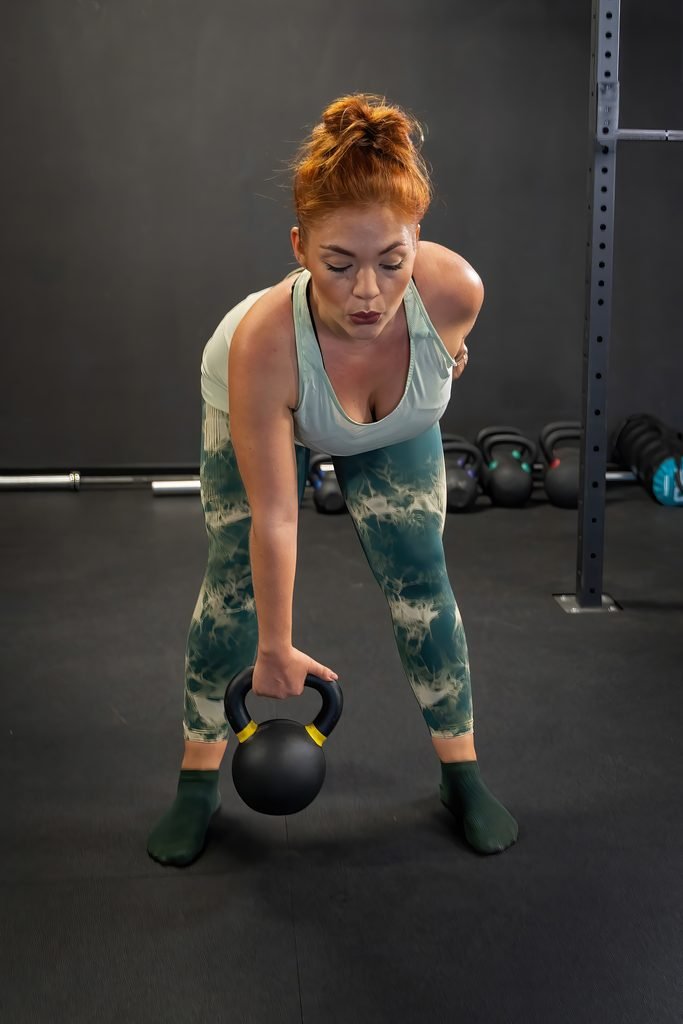
4. Single-Arm Kettlebell Row
The kettlebell row is excellent for building upper-body strength and improving posture.
Muscles worked:
- Back muscles
- Rear shoulders
- Biceps
- Core
How to perform:
- Place one hand on a bench or stable surface.
- Hold the kettlebell with the opposite hand.
- Pull the kettlebell toward your body.
- Lower it slowly while maintaining control.
Sets:
3 × 10 reps per side
Avoid using momentum. The movement should come from your back muscles rather than swinging the weight.
5. Turkish Get-Up
The Turkish get-up is one of the most challenging and complete kettlebell exercises.
It improves:
- Core stability
- Shoulder strength
- Balance
- Mobility
- Coordination
Because it requires control and concentration, beginners should start with a lighter kettlebell.
Sets:
3 reps per side
Beginner Full-Body Kettlebell Workout
If you are new to kettlebell training, start with simple movements and focus on technique.
Perform this workout 3 times per week:
Circuit:
- 15 kettlebell swings
- 12 goblet squats
- 10 kettlebell rows per side
- 8 clean and presses per side
- 30-second plank
Rest for 60–90 seconds between rounds.
Complete 3–5 rounds depending on your fitness level.
The goal is not to finish as fast as possible. Focus on controlled movements and proper form.
4-Week Kettlebell Progression Plan
Progressive overload is the key to improving with kettlebell training. Instead of increasing weight too quickly, gradually challenge your body over time.
Week 1: Learn Technique
Focus on:
- Correct movement patterns
- Comfortable weights
- Proper breathing
Do not worry about lifting heavy. Build a strong foundation first.
Week 2: Increase Volume
Increase:
- Repetitions
- Workout rounds
- Training consistency
Keep the same weight while improving your control.
Week 3: Increase Weight
If your form is strong, increase the kettlebell weight slightly.
Small improvements over time create long-term progress.
Week 4: Improve Conditioning
Create a more challenging circuit by reducing rest time or adding extra rounds.
However, always maintain proper technique.
Common Kettlebell Mistakes
Using Your Arms During Swings
The kettlebell swing is powered by your hips and legs.
Your arms should guide the kettlebell, not lift it.
Choosing Too Much Weight
Many beginners try to progress too quickly.
A heavy kettlebell with poor form can slow your progress and increase injury risk.
Master technique first, then increase the load.
Skipping Warm-Up
A proper warm-up prepares your body for training.
Spend a few minutes preparing your:
- Hips
- Shoulders
- Core
- Wrists
before starting your workout.
How Often Should You Train With Kettlebells?
The ideal kettlebell training frequency depends on your fitness level, experience, and how well your body recovers.
The goal is to train consistently while giving your muscles enough time to repair and become stronger. More workouts do not always mean better results. Proper recovery is an important part of building strength and improving performance.
Beginners
If you are new to kettlebell training, start with 3 workouts per week.
At this stage, your main focus should be:
- Learning correct technique
- Understanding basic movements
- Building consistency
- Allowing your body to adapt
Avoid increasing weight too quickly. Good form will help you progress safely.
Intermediate
People with some kettlebell experience can usually train 3–4 times per week.
At this level, you can gradually increase:
- Workout intensity
- Number of sets
- Training volume
- Kettlebell weight
Continue focusing on controlled movements and proper technique.
Advanced
Experienced lifters may train with kettlebells 4–5 times per week, depending on their goals and recovery ability.
At this stage, it is important to balance challenging workouts with:
- Rest days
- Proper nutrition
- Mobility work
- Quality sleep
Your muscles do not grow during the workout itself. They repair and become stronger during recovery.
My Final “Boring’’ Thoughts
A full-body kettlebell workout can be an excellent choice for beginners and experienced fitness enthusiasts alike.
With just one piece of equipment, you can build strength, improve endurance, increase mobility, and create an effective workout routine at home or in the gym.
The most important thing is to start with a manageable weight, learn the correct technique, and progress gradually.
Many people make the mistake of focusing only on lifting heavier, but consistent training with proper form will always produce better results.
Whether your goal is improving fitness, building muscle, or becoming more athletic, kettlebell training can be a simple and effective addition to your routine.
