

 By
By 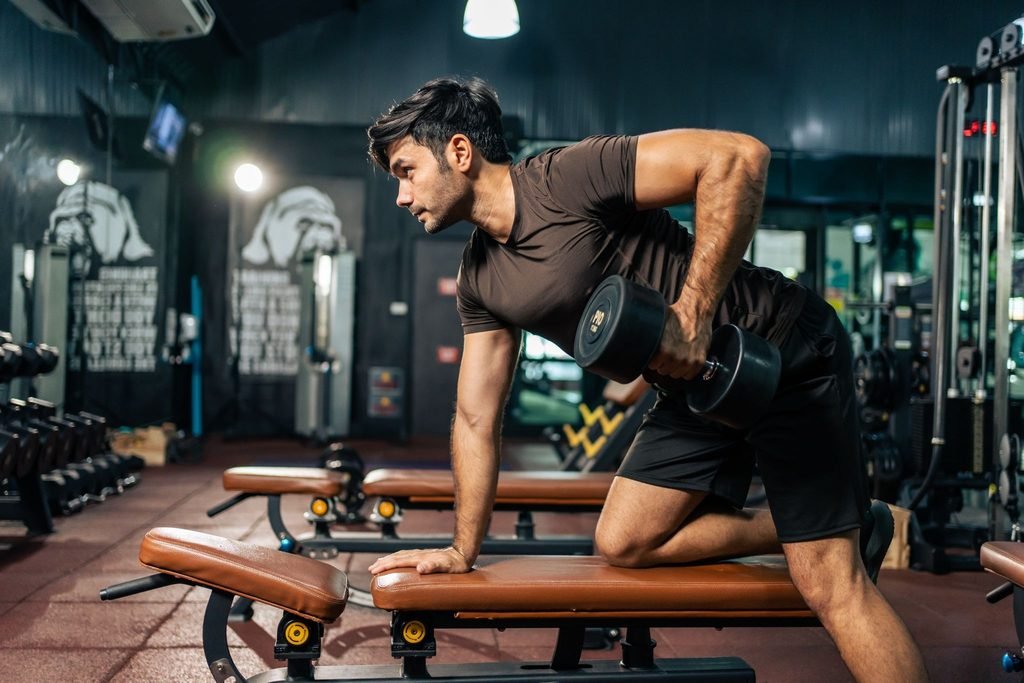
While researching back exercises with dumbbells, I noticed a common problem: most guides provide a list of exercises but rarely explain how to turn those movements into an effective workout.
Knowing several types of rows doesn’t tell me which exercises target my lats, which focus on my upper back, how many sets I should do, or how to progress.
My goal is simple: choose dumbbell exercises that target the major back muscles, use controlled form, and gradually make my training more challenging.
Resistance-training research supports this approach. A recent American College of Sports Medicine position stand on resistance training found that resistance training improves muscular strength and hypertrophy, while training volume and progression can influence results.
In this guide, I’ll cover 10 dumbbell back exercises, what each one targets, and how to combine them into practical workouts.
How Dumbbell Back Training Actually Works
Your back isn’t one muscle.
The lats help move your upper arm toward and behind your body. The trapezius and rhomboids help control your shoulder blades, while muscles such as the spinal erectors help support and move your spine.
That’s why I don’t rely on one exercise. A balanced dumbbell back workout can include:
- Rows for the lats and upper back
- Reverse flies for the upper back and rear shoulders
- Pullovers for shoulder extension
- Hip hinges for the spinal erectors and posterior chain
Exercise selection matters too. The American Council on Exercise’s evidence-based approach to training the back discusses using different exercises to address the back’s different functions rather than treating it as a single muscle.
I also prefer a controlled, comfortable range of motion rather than sacrificing form just to lift heavier dumbbells.
Back Exercises vs. a Back Workout
A list of exercises isn’t automatically a complete workout.
If I perform five nearly identical rowing variations, I’m creating unnecessary overlap. Instead, I choose movements according to the role they play in my program.
| Goal | Dumbbell Exercise |
| Overall back | Bent-over dumbbell row |
| Lat emphasis | One-arm dumbbell row |
| Supportedrowing | Chest-supported dumbbell row |
| Upper back | Reverse dumbbell fly |
| Lats without rowing | Dumbbell pullover |
| Posterior chain | Dumbbell Romanian deadlift |
| Upper traps | Dumbbell shrug |
| Back + core | Renegade row |
There isn’t one perfect dumbbell back exercise for everyone. The exercises I choose depend on my goals, available equipment, experience, and comfort.
10 Best Dumbbell Exercises for Your Back
1. One-Arm Dumbbell Row
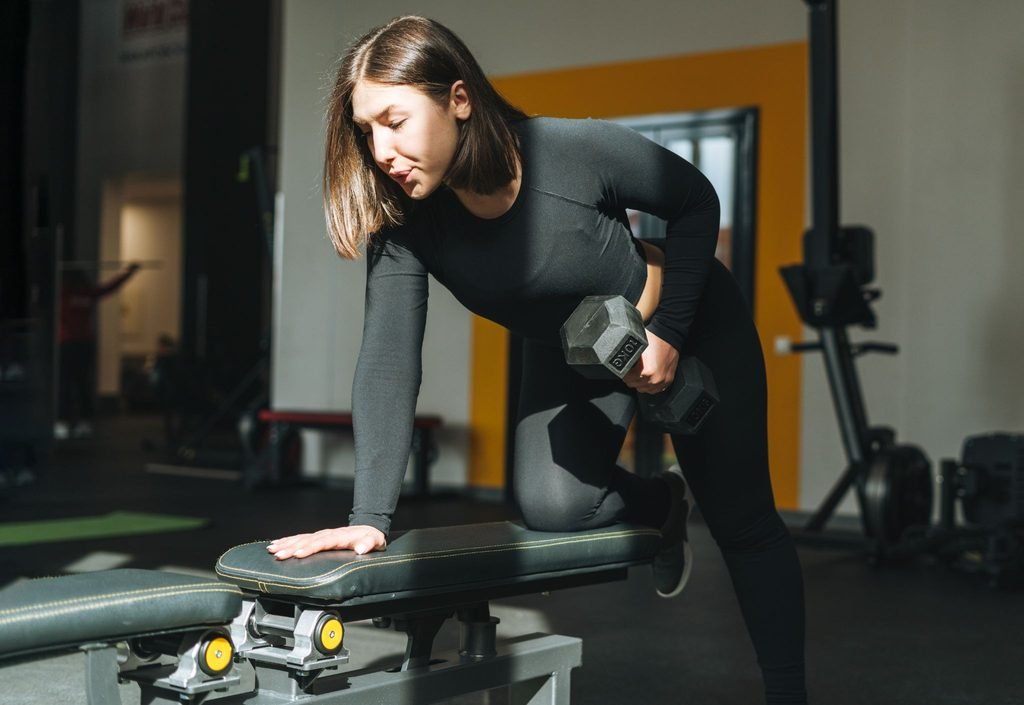
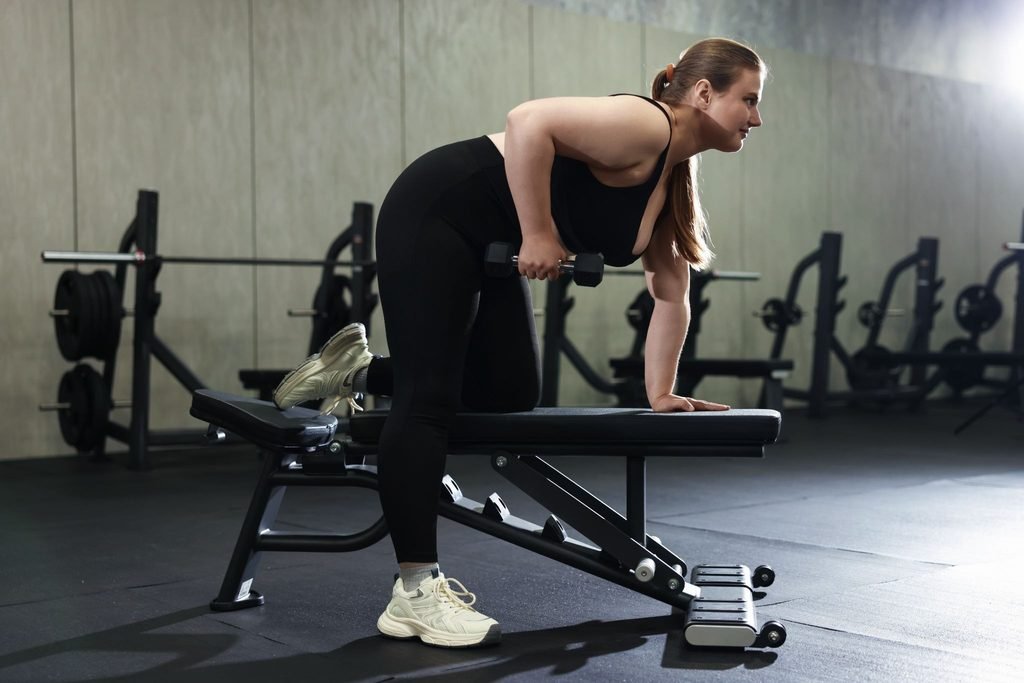
I place one hand on a bench or another stable surface and keep my torso controlled. I row the dumbbell toward my hip, then lower it under control.
Main emphasis: Lats and upper back
Starting point: 2–3 sets of 8–15 reps per side
I avoid rotating my entire torso just to move a heavier dumbbell.
2. Bent-Over Dumbbell Row
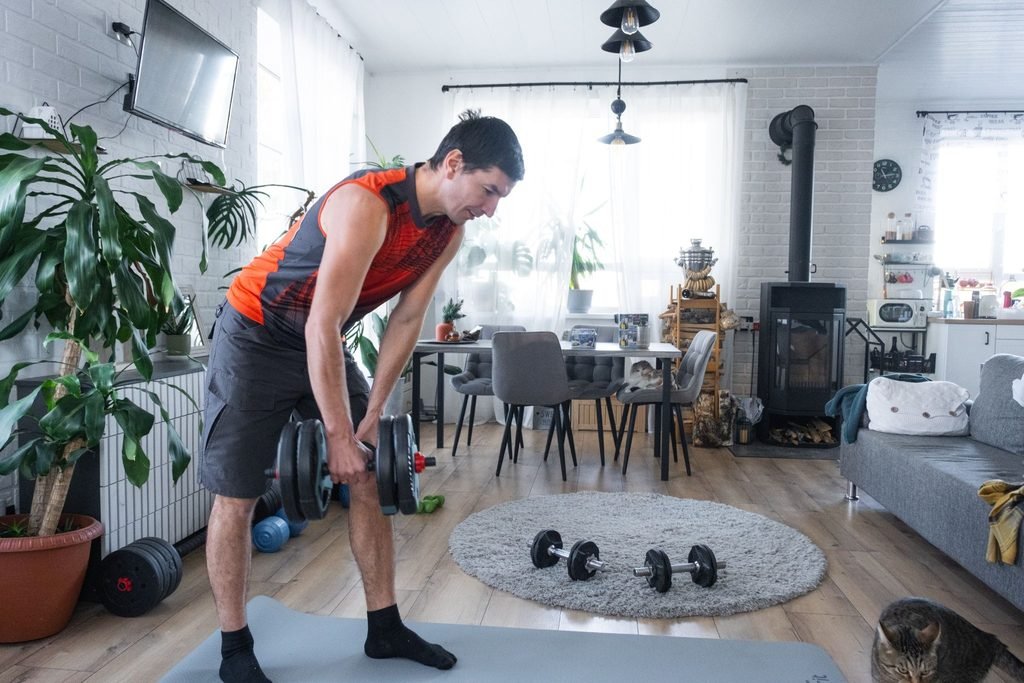
I hold a dumbbell in each hand, hinge at my hips, keep my torso stable, and row the weights toward my body.
Main emphasis: Lats, traps, and rhomboids
Starting point: 2–3 sets of 8–15 reps
I especially like this exercise when I want a back workout with dumbbells without needing a bench.
3. Chest-Supported Dumbbell Row
I lie face-down on an incline bench, row the dumbbells upward, and lower them under control.
Main emphasis: Mid and upper back
Starting point: 2–3 sets of 8–15 reps
The bench supports my torso so I can focus on the rowing movement.
4. Dumbbell Pullover
I lie on a bench and hold one dumbbell securely. I lower it behind my head within a comfortable range before returning to the starting position.
Main emphasis: Lats, with assistance from other upper-body muscles
Starting point: 2–3 sets of 10–15 reps
I never force my shoulders into an uncomfortable range.
5. Reverse Dumbbell Fly
Using relatively light dumbbells, I hinge forward and move my arms outward under control.
Main emphasis: Upper back and rear deltoids
Starting point: 2–3 sets of 10–20 reps
I usually need much less weight here than I do for rows.
6. Dumbbell Romanian Deadlift
I hold the dumbbells near my legs and push my hips backward while keeping my torso controlled. I then extend my hips to return to standing.
Main emphasis: Spinal erectors, hamstrings, and glutes
Starting point: 2–3 sets of 8–12 reps
This is a hip-hinge movement rather than another rowing variation.
7. Renegade Row
I start in a stable plank position with my hands supported on dumbbells. I row one dumbbell while resisting the urge to rotate my torso.
Main emphasis: Back and core stability
Starting point: 2–3 sets of 6–12 reps per side
If my hips rotate excessively, I reduce the load.
8. Dumbbell Shrug
I hold dumbbells by my sides and elevate my shoulders under control before slowly lowering them.
Main emphasis: Upper trapezius
Starting point: 2–3 sets of 10–15 reps
I focus on moving my shoulders upward rather than rolling them in circles.
9. Dumbbell Seal Row
I lie face-down on a safe elevated setup that allows the dumbbells to hang freely. I then row without using momentum from my lower body.
Main emphasis: Mid and upper back
Starting point: 2–3 sets of 8–15 reps
If I can’t create a safe setup, I use the chest-supported dumbbell row instead.
10. Dumbbell Rear-Delt Row
I row the dumbbells while keeping my elbows farther away from my torso than I would during a typical lat-focused row.
Main emphasis: Upper back and rear deltoids
Starting point: 2–3 sets of 10–15 reps
I focus on controlled repetitions rather than maximizing the weight.
My Dumbbell Back Workout Plan
I don’t perform all 10 exercises in one session. A few complementary movements can create an effective workout without unnecessary volume.
Beginner Dumbbell Back Workout
✓ One-arm dumbbell row — 3 × 8–12
✓ Bent-over dumbbell row — 2 × 10–15
✓ Dumbbell Romanian deadlift — 2 × 8–12
As a beginner, my priority is consistent technique before increasing training volume.
Muscle-Building Dumbbell Back Workout
✓ Chest-supported row — 3 × 8–12
✓ One-arm dumbbell row — 3 × 10–15
✓ Dumbbell pullover — 2 × 10–15
✓ Reverse dumbbell fly — 2 × 12–20
When muscle growth is my goal, training volume matters. The recent ACSM review found that higher weekly resistance-training volume can enhance hypertrophy, although individual needs vary.
At-Home Dumbbell Back Workout Without a Bench
✓ Bent-over dumbbell row — 3 × 8–15
✓ Rear-delt row — 2 × 10–15
✓ Reverse dumbbell fly — 2 × 12–20
✓ Dumbbell Romanian deadlift — 3 × 8–12
This gives me a practical dumbbell back workout at home without needing a weight bench.
How I Progress My Dumbbell Back Training
Use Progressive Overload
I don’t replace exercises every week when they’re working for me. Instead, I try to improve my performance gradually.
One simple method is double progression. If my target is 8–12 reps, I use the same dumbbell until I can perform my planned sets near the top of that range with good form. Then I increase the resistance and work my way up again.
If I only have lighter dumbbells, I can progress by adding reps, improving control, carefully adding sets, or choosing a more challenging variation.
Nutrition and Recovery
Resistance training provides the stimulus, while nutrition and recovery support adaptation.
I prioritize adequate protein and an overall balanced diet with fruits, vegetables, whole grains, and other nutrient-dense foods. I don’t need a special “back-building” food.
I also choose a realistic training schedule that I can maintain. Recovery is part of the plan, so I give trained muscles time to recover and pay attention to persistent pain, unusual fatigue, or declining performance.
Common Mistakes That Can Stop Progress
Using Too Much Weight
Heavy dumbbells can be tempting, but excessive weight may cause me to swing, rotate my torso, or shorten the movement.
Better approach: Choose a challenging load that still allows controlled repetitions.
Doing Only Rows
Rows are valuable, but too many similar variations create unnecessary overlap.
Better approach: Combine rows with complementary movements such as reverse flies, pullovers, shrugs, or hip hinges.
Judging a Workout by Soreness
Muscle soreness alone doesn’t tell me how productive a workout was.
Better approach: Track load, repetitions, technique, and consistency.
Never Progressing
Doing the same easy workout indefinitely gives my body little reason to keep adapting.
Better approach: Gradually make training more challenging.
Taking Every Set to Failure
I don’t need to reach complete muscular failure during every set. The 2026 ACSM position stand reported that training to momentary muscle fatigue did not consistently influence training outcomes.
Why Do I Feel Dumbbell Rows in My Biceps?
My biceps naturally contribute during rows because they help flex the elbow. Feeling them working doesn’t automatically mean I’m doing the exercise incorrectly.
If my arms seem to dominate the movement, I check my load and form. I keep my torso controlled, avoid excessive momentum, and lower the dumbbell deliberately.
Rather than judging the exercise only by where I feel a “burn,” I focus on repeatable technique and long-term progression.
How I Track My Back Training Progress
I don’t judge progress by appearance alone. I track:
- Weight: Am I gradually using heavier dumbbells?
- Repetitions: Can I perform more quality reps?
- Technique: Can I control the same load better?
- Photos: Is my back development changing over several months?
- Consistency: Am I completing my planned workouts?
Heavier isn’t automatically better for every goal. A systematic review and network meta-analysis comparing resistance-training loads found muscle growth across different training loads, while heavier-load training produced greater strength improvements.
Does Range of Motion Matter?
I aim to use a controlled range of motion that feels comfortable rather than deliberately shortening every repetition just to lift more weight.
A systematic review and meta-analysis examining range of motion during resistance training found advantages of full-range training for strength in the studies analyzed, with some potential hypertrophy benefits as well.
That doesn’t mean I force every exercise through the largest possible range. My usable range should still respect my mobility, exercise setup, and comfort.
My Final ‘‘Boring’’ Thoughts
Effective back exercises with dumbbells aren’t about collecting as many movements as possible.
I choose exercises that target different functions of my back, perform them with controlled form, and progressively make my training more challenging.
I don’t need all 10 exercises in every workout. A few well-chosen movements can create an effective dumbbell back workout whether I’m training at home or in a gym.
The long-term strategy is simple: train consistently, progress gradually, recover properly, and let the results build over time.
