

 By
By 
The first time I began to research home biceps workouts, I noticed a problem.
The majority of articles covered only one thing:
- 5–10 exercises you can perform at home.
However, they were hardly ever addressing the key question:
The problem is that it actually does (to a point) and can be followed with my own query: how to build bigger biceps without weights?
Yes, but not just by using dumbbell-less curls.
No single exercise MAKES you grow muscle. It is when I have generated enough training stimulus, yet challenged myself in new ways within small increments, with plenty of nutrients and recovery to follow.
A lot of newcomers to lifting think that for big arms you need:
● A gym membership
● Heavy dumbbells
● Expensive equipment
● Training programs at a more advanced level
A home workout can boost arm strength, muscle endurance, and novice muscle growth when designed properly.
This guide is not just an exercise list, but rather, I hope it will serve as a process.
I will explain:
● No tools involved: How to grow biceps
● List of exercises that really work the biceps
● Progressive overload at home
● The 4-week Growth Plan can be followed easily
● Errors that hinder action
NOT A QUICK FIX TO RESULTS.
A scientifically-based way for me to develop my arms further with the equipment available to me in-house.
You Grow Biceps No Equipment Required: How
The fastest way to kill any motivation that you have for home workouts is:
“No weight, no muscle growth”
That is not true.
The body simply does not identify resistance as you standing on a dumbbell or using some machines and bands, and, of course, it definitely does not know whether you do push-ups or sit ups.
The muscle responds to challenges.
When it comes to the principles of muscle growth, I would say three things are important.
Mechanical Tension
Mechanical tension is when the muscle is contracting against loads.
With dumbbell curls, the weight itself provides that resistance.
With no equipment, I can apply tension through:
● Self-resistance
● Slower repetitions
● Longer holds
● Harder variations
● An approach of training closer to fatigue
For example:
Doing a standard towel curl may appear simple.
Yet, when I apply more force against the towel, slow down the eccentrics and hold in contraction; however, my biceps receive more mechanical tension.
It is not only about moving my arm.
Activating the muscle is the goal.
Progressive Overload
And herein lies the gap with many home workout articles.
They will explain exercises but not how to keep progressing.
Muscles respond to progressively challenging stimulus.
With weights, progression is simple:
20 lbs curl → 25 lbs curls → 30 lbs scurl
Without equipment, I progress differently.
I can increase difficulty by:
✓ Adding repetitions
✓ Adding sets
✓ Slowing the movement
✓ Increasing hold time
✓ Reducing rest periods
✓ Using harder variations
I believe it is one of the KEY principles behind effective resistance training progressive overload.
TOO OFTEN WE FOCUS ON HOW MANY WORKOUTS WE DO AS OPPOSED TO THE QUALITY OF THOSE WORKOUTS.
One mistake is thinking that more reps = better results.
There is no need for you to perform 20 different arm movements.
A better approach is:
● Select effective workouts
Control your using it in the way you perform.
● Progress gradually
● Stay consistent
An extremely simple workout that you do over and over is typically better than a challenging program which can’t be maintained.
Are You Able To Build Huge Arms Without Weights?
I think being the most successful is an unrealistic expectation.
This is a no-equipment biceps workout to help me:
✓ Build beginner muscle
✓ Improve arm strength
✓ Increase muscular endurance
✓ Preserve muscle mass while traveling or during busy times
However, there are limitations.
Adding external weight gets very difficult as an advanced lifter is going to be necessary at some point because by now progressive overload doesn´t occur without any additional resistance.
The intention is not to act as if it doesn’t make a difference.
The objective is figuring out how to get the most bang for my buck with what I have at my disposal.
The Difference That Matters: Growth In Biceps Vs Bigger Arms
A lot of people only work-out their biceps because they want the biggest arms possible.
Arm size is influenced by many different muscles:
Biceps
Front of the upper arm (responsible for curling)
Triceps
Giant contributor to entire arm circumference.
Brachialis
A muscle underneath the biceps that adds thickness to your arms.
Forearms
Neck muscles train your grip strength and develop evenly.
Your entire arm-building strategy should consist of:
✓ Biceps training
✓ Triceps training
✓ Pulling movements
✓ Overall upper-body strength
Blah blah into only working one muscle.
10 Equipment-Free Biceps Workouts Backed By Science
Direct Biceps Exercises
Self-Resistance Biceps Curl
I control the resistance so this is one of the only no-equipment biceps workout for you.
How to perform:
● Put one hand on the non-dominant forearm
● Curl upward
Push down with the other hand
● Continuous load
Target:
Primary:
● Biceps
Workout:
3 sets × 12–15 reps
Progression:
● Make sure to push even more with the opposite arm
Mention the lowering phase slowly
● Hold the top position
Towel Biceps Curl
A towel used against opposing force creates resistance.
How to perform:
● Step on a towel
● Hold both ends
● Curl upward
● Exert downward pressure using your feet
Target:
● Biceps
● Forearms
Workout:
3 sets × 10–15 reps
Isometric Biceps Hold
This exercise involves resisting force without moving.
How to perform:
● Do some curls with the arm
● Contract the biceps
● Hold the position
Workout:
3 rounds × 20–40 seconds
Why it works:
It holds the muscle under tension through a full range of motion.
Chin-Up Hold (If Available)
Unless you have a safe bar, chin-up holds would be about one of the strongest bodyweight options.
Why it works:
You are very well trained after biceps pulling movements.
Beginner option:
● Short holds
● Slow negatives
● Assisted repetitions
Supporting Upper-Body Exercises
Bodyweight Rows
Bodyweight rows train:
● Biceps
● Back
● Grip strength
They are great for enhancing pulling capacity, which contributes to arm strength.
Doorway Towel Rows
The towel portion of this movement provides a pulling pattern.
Benefits:
● Upper-body strength
● Arm endurance
● Stability
Do this ONLY in a safe setup
Slow Negative Push-Ups
Push-ups are not a specific biceps exercise.
However, they improve:
● Triceps strength
● Shoulder stability
● Upper-body control
Plank to Push-Up Transitions
This improves:
● Arm endurance
● Core stability
● Shoulder control
Backpack Curls
Put some books in a backpack, and it serves as variable resistance.
This is beneficial because it helps you advance more easily than pure-bodyweight training types.
Maximum Tension Biceps Flex
Beginner method that is really simple.
How:
● Make Full Bicep Flex
● Hold maximum tension
● Repeat
Workout:
5 rounds × 15–30 seconds
Grow Your Biceps In 4 Weeks (No-Equipment)
My workout routine only makes sense if I have a chance to get better over time.
One mistake I see when doing the research for home workouts is people collecting exercises without an actual progression system.
The exercises are just the beginning.
That is where the real payoff comes from; by gradually increasing the challenge.
The idea of this plan that spans 4 weeks is to increase strength and muscle control, as well as create progressive overload without using traditional weights.
Week 1: Build My Foundation
Goal:
Build consistency with the proper technique.
In the first week, I write for:
✓ Controlled repetitions
✓ Feeling the biceps working
✓ Learning proper movement patterns
Workout (3 Days Per Week)
Self-Resistance Biceps Curl
3 sets × 12 repetitions
Towel Biceps Curl
3 sets × 10 repetitions
Isometric Biceps Hold
3 rounds × 20 seconds
Slow Negative Push-Ups
2 sets × 10 repetitions
My focus:
I am not trying to obliterate my muscles
I’m putting the foundation so I could build and get better later.
Week 2: Increase Training Volume
Goal:
Create a stronger training stimulus.
With the movements now more second nature, I ramp up the workload.
Changes:
● Add more sets
● Increase repetitions
● Extended the time under contraction
Example:
Week 1:
Self-resistance curls:
3 × 12
Week 2:
Self-resistance curls:
4 × 15
I also focus on:
● Slower lowering phases
● Better control
● Stronger contractions
Week 3: Increase Intensity
Goal:
You simply make the exercises harder but without an increase in weight.
I increase the intensity by how I perform each each movement.
Methods:
Slow Negatives
Instead of dropping quickly:
I lower for 3–5 seconds slow.
This increases time under tension.
Longer Holds
Example:
Week 1:
20-second hold
Week 3:
40-second hold
Reduced Rest Time
Example:
90 seconds rest becomes:
60 seconds rest
This increases workout difficulty.
Week 4: Maximize Progress
Goal:
Progressive overload and test improvement
My workout:
Self-Resistance Curls
4 sets × 15–20 reps
Towel Curls
4 sets × 12–15 reps
Isometric Holds
4 rounds × 40 seconds
Bodyweight Rows or Chin-Up Holds
3 challenging sets
It is not about moving for repetitions forever.
It is to ensure that the challenge being set for adaptation action is sufficiently robust.
Expert Method to Building Bigger Arms
Training Strategy
One of the most important things I have picked up over researching muscle growth is that: consistency trumps complexity.
I donot require dozen of exercises.
I need:
✓ Effective movements
✓ Progressive overload
✓ Proper technique
✓ Regular training
One perfect workout which I do every few weeks is less valuable than a simple workout repeated consistently.
Nutrition Strategy for Biceps Growth
Training provides utility to the adaptation of my muscle.
Recovery needs materials, and nutrition provides those.
Prioritize Protein
protein it supports muscle repair and growth,
Good options include:
● Eggs
● Chicken
● Fish
● Greek yogurt
● Lean meat
● Beans
● Lentils
Having a protein element in each meal of the day aids workout goals which focus on developing muscle mass.
Eat Enough Energy
If I am always under eating, it will affect my muscle building.
A balanced approach helps me:
● Train harder
● Recover better
● Maintain performance
Perhaps extreme dieting decreases workout quality and promotes the difficulty of gaining muscle mass instead!
Recovery Strategy
So muscle growth does NOT occur during the WORKOUT.
Training creates the signal.
The body adapts with recovery.
Important recovery habits:
✓ Sleep 7–9 hours
✓ Stay hydrated
✓ Allow muscles to recover
✓ Manage stress
Harder is not necessarily better.
It is smarter training that leads to long-lasting results.
Most Common Biceps Growth Mistakes
Doing Too Many Exercises
Why people make this mistake:
They think more exercise equals faster results.
Why it fails:
Muscle Growth: Muscles grow when they have to work, not 50 ways of doing the same exercise.
Better solution:
Focus on:
● Some Solid Workouts
● Good form
● Gradual Progress
Leverage Momentum Not Muscle Control
Why people make this mistake:
It becomes a tough exercise so they swing their body.
Why it fails:
Biceps are less under tension as other muscles compensate.
Better solution:
I focus on:
✓ Controlled movement
✓ Stable posture
✓ Slow lowering phase
Never Increasing Difficulty
Why people make this mistake:
For months, they go through the same routine.
Why it fails:
The body has the same challenge to adapt.
Better solution:
Progress through:
● More repetitions
● More sets
● Longer holds
● Harder variations
Training Arms Every Day
Why people make this mistake:
Where they believe that more frequency means quicker development.
Why it fails:
Muscles need recovery to adapt.
Better solution:
Train the bicep regularly, but allow time to recover from hard efforts.
Ignoring Other Arm Muscles
Why people make this mistake:
They only train their biceps because it can be seen.
Why it fails:
More than one muscle is needed to completely develop the arms.
Better solution:
Include:
● Biceps training
● Triceps work
● Pulling movements
● Strength training for the whole body
How I Measure My Biceps Progress
My measure for progress isn’t just through a mirror.
Muscle changes are slow, so I track different aspects of improvement.
Arm Measurements
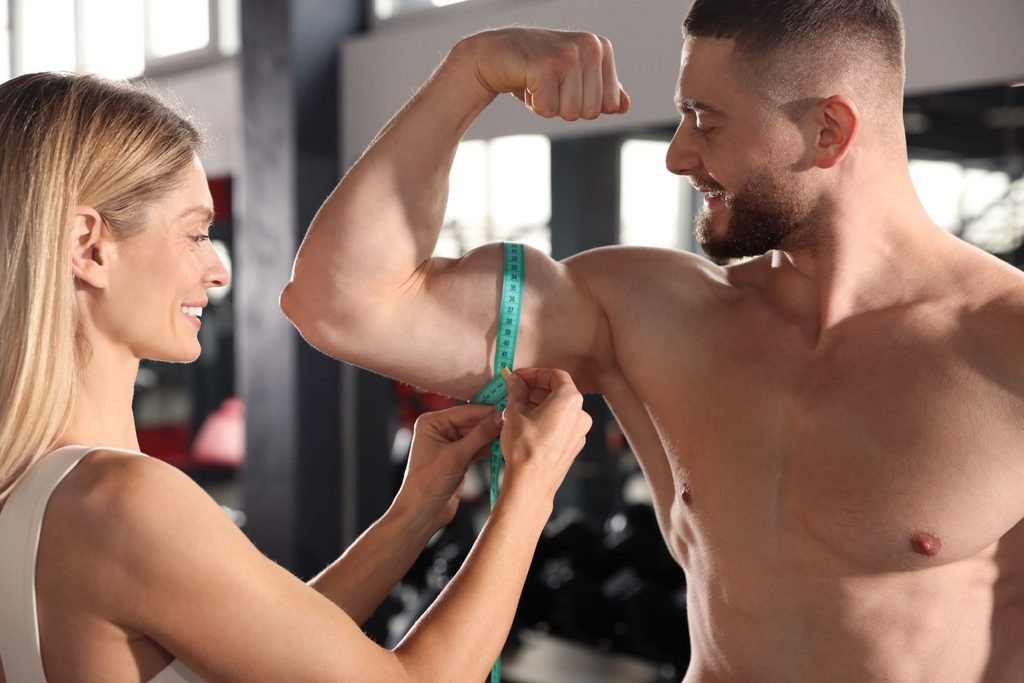
I measure:
● Circumference of the upper arm
● Same arm position
● Same conditions every time
Faint change is easier to see as time continues.
Strength Improvements
I track:
✓ More repetitions
✓ Longer holds
✓ Better exercise control
✓ Harder variations
For me, being stronger is often the first sign that my training is working.
Progress Photos
I can track my progress with photos using:
● Similar lighting
● Same angle
● Same posture
This provides a better basis for comparison.
Workout Consistency
I also track habits:
● Number of workouts I managed to accomplish
● Sleep quality
● Nutrition consistency
● Recovery
The activity I do is the result of what I achieve.
My Final ‘‘Boring’’ Thoughts
Researching home biceps workouts, the number one thing that was missing wasn’t exercise selection.
Learning how to deploy those exercises effectively.
The principles behind building bigger arms without equipment are the same as those that underlie any successful strength program:
✓ Create enough muscle tension
✓ Apply progressive overload
✓ Train consistently
✓ Eat enough protein
✓ Recover properly
While equipment makes progression easier, it is not the sole means of developing strength.
When done right, a biceps workout at home with no equipment can help you develop stronger, more capable arms at the same time as establishing an exercise habit for the long term.
