

 By
By 
There’s one thing I noticed when I started researching medial triceps head exercises: many guides say an underhand grip “isolates” the medial head, but the evidence is not strong enough to make that claim.
The medial head is one of the three heads of the triceps brachii. I cannot switch the other two heads off, so my goal is not perfect isolation. I focus on elbow-extension exercises that are comfortable, progressive, and use more than one shoulder position.
In this guide, I’ll explain how medial-head training works, where reverse-grip and overhead exercises fit, and seven practical exercises
How Medial Triceps Head Training Actually Works
The triceps has three heads: long, lateral, and medial. The medial head originates on the back of the upper arm and contributes to elbow extension. Anatomical references also indicate that it remains active regardless of whether the forearm is pronated or supinated.
Changing from a palms-down to a palms-up grip may affect how an exercise feels, but it does not make the medial head the only working triceps head.
Shoulder position may matter more. In a small biomechanics study, modeled medial-head force was greater than the other heads at higher shoulder-elevation angles.
This does not prove that overhead training selectively grows the medial head, but it suggests arm position can influence triceps contribution.
A 12-week study found greater total triceps growth from overhead cable elbow extensions than from cable extensions with the arm by the side. Because the study combined lateral- and medial-head measurements, it cannot show how much extra growth came from the medial head.
My practical takeaway is simple:
I train elbow extension in more than one shoulder position instead of searching for one “magic” grip
Medial Head Emphasis vs. Isolation: The Difference That Matters
The common mistake is focusing on isolation. All three triceps heads help extend the elbow, so “emphasis” is a more accurate word.
A 2024 study compared single-arm pushdowns with pronated and supinated forearm positions. It found grip-related differences, but the medial head was not measured. So it cannot prove that an underhand grip produces greater medial-head activation.
I still use a reverse grip if it feels comfortable. I simply treat it as a variation, not a scientifically proven medial-head shortcut
7 Medial Triceps Head Exercises Worth Using
1. Overhead Cable Triceps Extension
This trains elbow extension with my arms elevated. Shoulder-position research makes the setup interesting, while longer-term evidence supports overhead cable extensions for overall triceps growth.
I keep my ribs controlled, let my elbows bend comfortably, and extend without turning the exercise into a shoulder movement. A practical range is 8–15 controlled reps.
2. Standard Cable Pushdown
The standard pushdown is stable and easy to progress. It trains the medial head because the medial head contributes to elbow extension not because an attachment isolates it.
I keep my upper arms relatively still and avoid swinging my torso. I usually work in the 8–15 rep range.
3. Reverse-Grip Cable Pushdown
This is probably the most famous “medial head” exercise, but its reputation is stronger than the direct evidence.
If the underhand position feels natural, I use it as an optional variation and reduce the load if needed to keep my wrists comfortable. I do not assume it is superior.
4. Single-Arm Overhead Cable Extension
The single-arm version lets me adjust my shoulder and elbow path more freely. I like it when a two-arm rope extension feels awkward.
I prioritize smooth elbow flexion and extension over heavy loading and usually perform 10–15 reps per arm.
5. Lying Triceps Extension
I can perform this with an EZ-bar, dumbbells, or cables. It gives me another elbow-extension movement while placing my upper arm differently from a pushdown.
I lower the resistance under control and use a range of motion that feels comfortable on my elbows.
6. Close-Grip Bench Press
The close-grip bench press is not a medial-head isolation exercise, but it lets me load the triceps heavily while also training the chest and shoulders.
I use a comfortably narrow grip that keeps my wrists stacked rather than forcing my hands extremely close together.
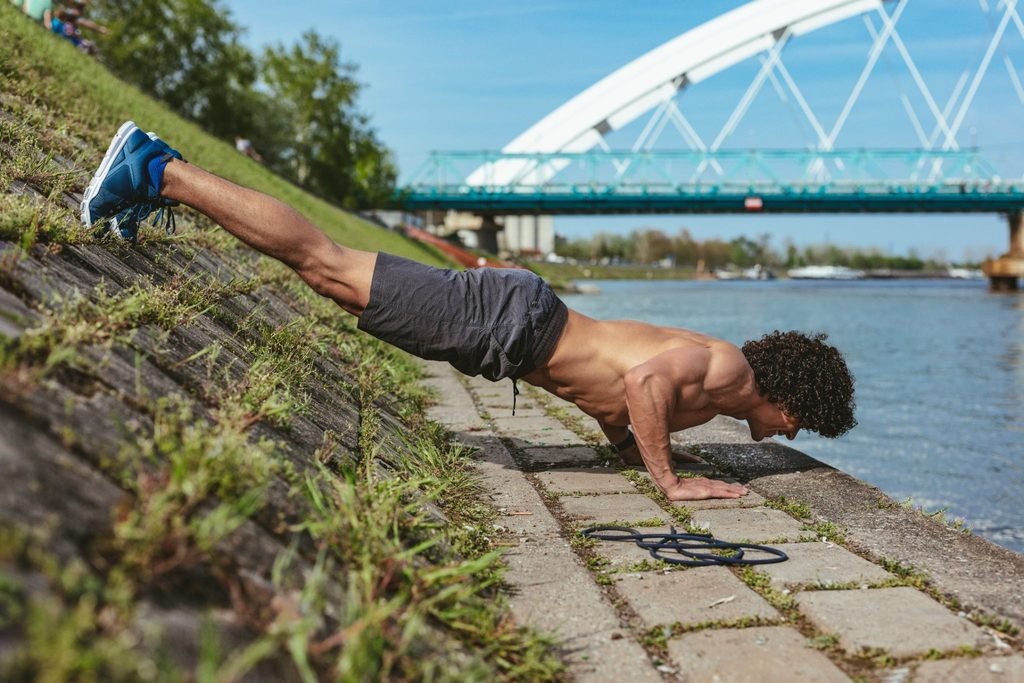
7. Close-Grip or Diamond Push-Up
For home training, this is practical. I place my hands relatively close together without forcing a perfect diamond if that bothers my wrists.
To make the exercise harder, I add reps, slow the lowering phase, elevate my feet, or add external resistance.
My 4-Week Medial Triceps Action Plan
Week 1: Build Technique
I start with one pushdown and one overhead extension.
I choose a controllable load and stop when my form clearly breaks down.
The goal is repeatable technique, not maximum soreness.
Week 2: Build Consistency
I spread direct triceps work across two weekly sessions. Weekly volume matters more than frequency for its own sake, so two sessions simply help me distribute work and recover.
Week 3: Progress the Exercises
I track reps and resistance. When I reach the top of my target rep range with good form, I add a small amount of resistance or another rep. This gives me a clearer progression system than constantly changing exercises.
Week 4: Personalize the Plan
I keep movements that feel best and let me progress. If a variation irritates my wrists, elbows, or shoulders, I replace it rather than forcing it.
Expert Strategies for Better Triceps Growth
Training Strategy
I combine an arm-at-the-side movement, such as a cable pushdown, with an elevated-arm movement, such as an overhead cable extension.
I also count the triceps work I get from presses, dips, and push-ups when planning my total workload.
Nutrition Strategy
Resistance training provides the growth stimulus, but nutrition supports adaptation.
Research on resistance training and protein intake suggests that gains tend to level off around roughly 1.6 grams of protein per kilogram of body weight per day for many people.
I treat that as a useful reference point, not a rigid rule.
Lifestyle and Recovery Strategy
I keep my main exercises long enough to measure progress. Constantly changing grips and attachments makes progressive overload harder to track.
I also pay attention to elbow irritation, unusual soreness, and declining pressing performance.
If recovery is poor, I reduce direct triceps volume before adding more work.
Common Mistakes That Can Stop Progress
1. Trying to completely isolate the medial head.
I focus on effective elbow extension and overall triceps development instead.
2. Assuming reverse grip is automatically superior.
The direct evidence does not establish it as the best medial-head option.
3. Using only one shoulder position.
Mixing pushdowns with overhead or lying extensions gives me more variety in how the triceps is trained.
4. Using too much weight.
Heavy loads are useful only if I can control the movement and keep tension where I want it.
5. Ignoring compound pressing.
Bench presses, overhead presses, dips, and push-ups already add meaningful triceps work.
How I Track Progress
I do not judge progress by how pumped my arms feel after one workout.
I track resistance and reps, exercise form, upper-arm circumference, progress photos, and training consistency.
My main performance marker is whether I can do more reps or use more resistance with the same controlled technique.
For body changes, I compare photos under similar lighting and measure my upper arm under similar conditions. I remember that upper-arm size reflects the biceps, triceps, and surrounding tissue, not the medial head alone.
My Final ‘‘Boring’’ Thoughts
The best medial triceps head exercises are not secret movements.
I want exercises that let me extend my elbows through a comfortable range, train the triceps from more than one arm position, and progressively overload over time.
My basic combination is a cable pushdown plus an overhead extension, with close-grip pressing, lying extensions, or push-ups added when they fit my program.
Reverse-grip pushdowns are optional not mandatory.
The science keeps my expectations realistic: shoulder position may change triceps contribution, but no single exercise has been proven to completely isolate the medial head. For long-term results.
I prioritize consistent training, progressive overload, enough protein, and recovery over chasing the perfect grip.
