

 By
By 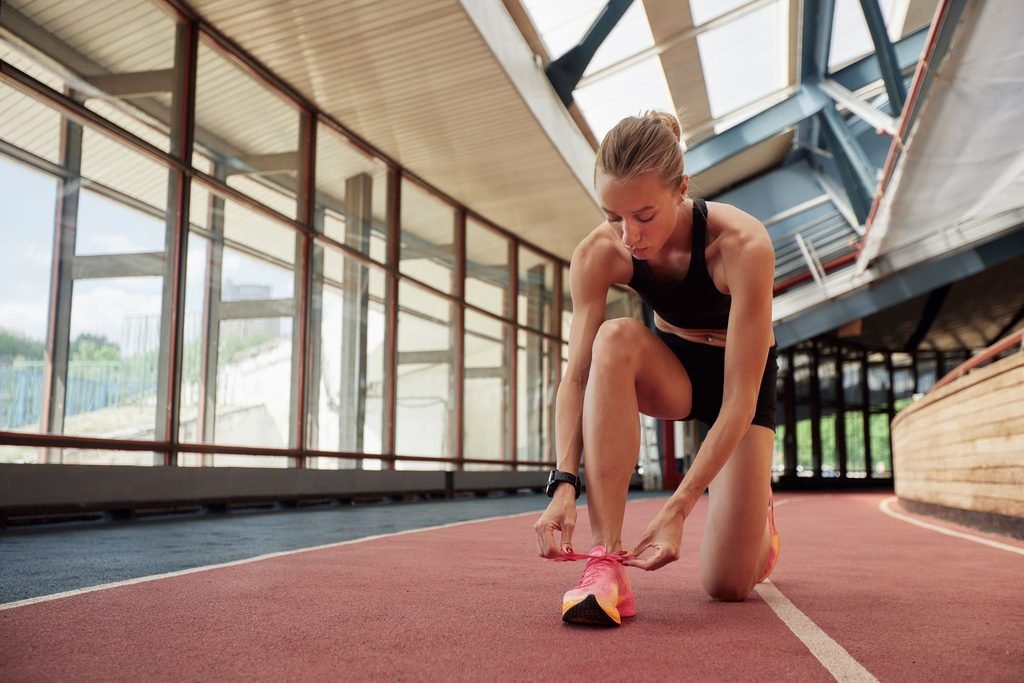
When I began looking into women’s track sneakers, I was immediately confronted with the bewildering prospect of choosing between shoes with aggressive spike plates, those that resemble running shoes, sprint spikes, distance spikes, racing shoes, and everyday trainers.
The truth is, there is not one track shoe that will suit every female runner and every scenario in which she finds herself.
A woman racing the 100-meter dash has completely different needs from her competitor racing the 5,000-meter endurance race.
I might find myself running in spikes for a competitive race, but the same shoes may not be the most appropriate for warm-ups or easy daily running on the track.
I want to stop thinking about track footwear in terms of price and style and begin thinking about how the shoes can serve me: what I need them for, what level of experience I have, and how the spike or shoe feels on my feet.
The Basics Behind Women’s Track Sneakers
Track shoes are designed to keep me light on my feet while simultaneously providing the amount of grip, support, and feel on the ground I need to run well.
Depending on the event, I need different features.
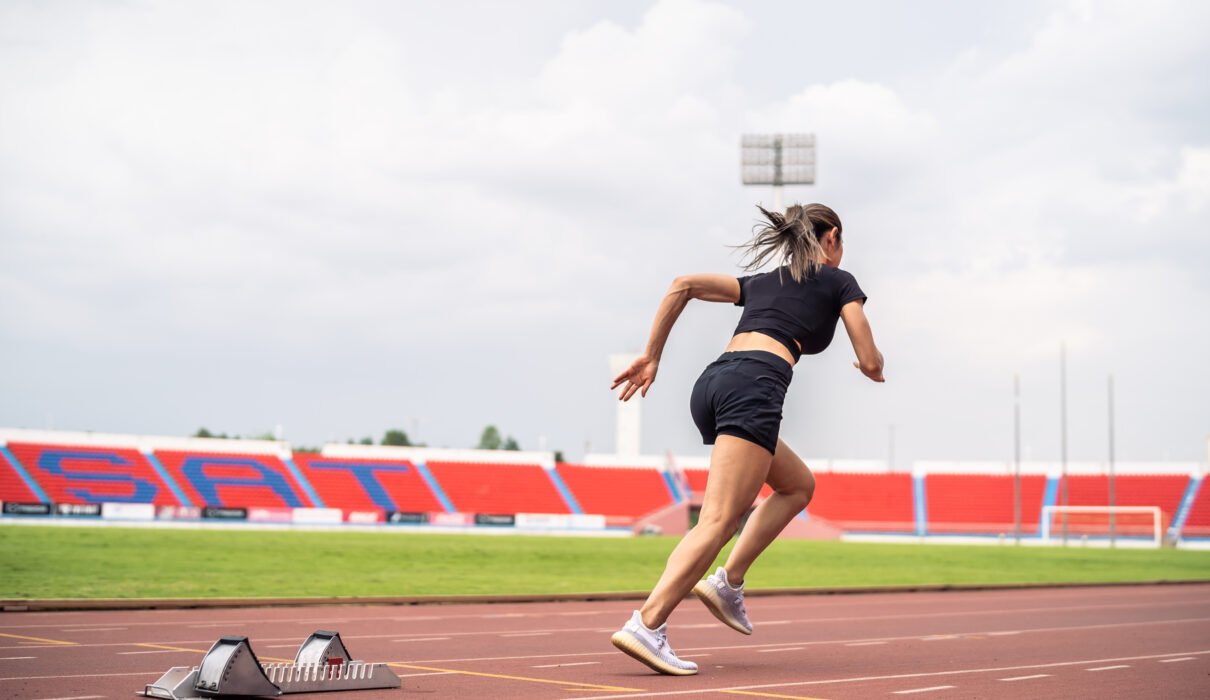
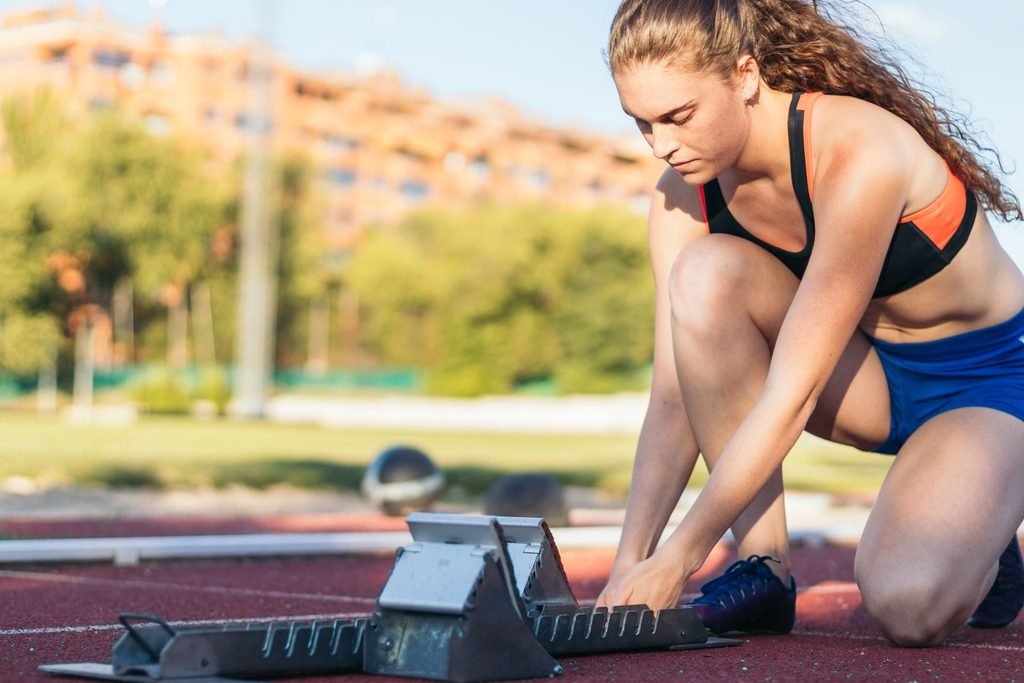
Sprint spikes usually have an aggressive forefoot to drive me forward while providing a stiff platform as I accelerate and maintain my speed.
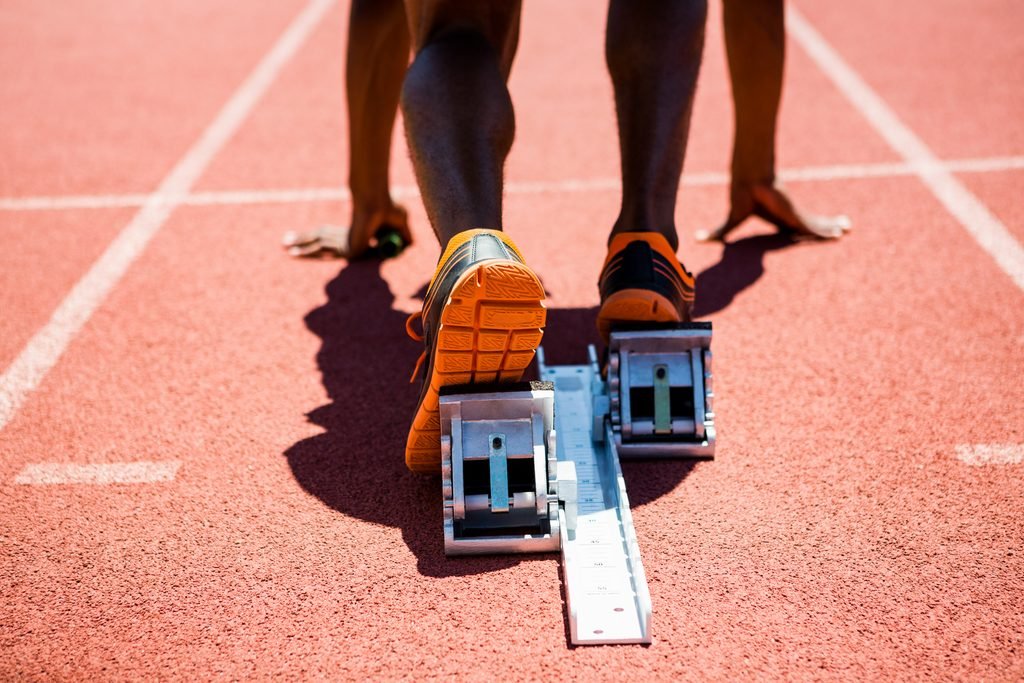
Since the distances are short, I also need plenty of traction to prevent slipping during the race.
Distance spikes, on the other hand, balance low weight and traction with more cushioning. Modern technology allows spikes to combine responsive foam and stiffness in the same shoe.
Research on advanced footwear technology spikes found performance benefits from modern foam-based spikes compared with traditional spikes in trained runners.
However, the results also show why I should not assume every design works identically for every athlete.
Technology is useful, but research on shoe stiffness and sprint performance also shows that simply increasing stiffness does not guarantee better sprint times.
I think of track sneakers as specialized equipment. The most appropriate shoe for me depends on what I intend to do in the first place.
Track Sneakers vs. Running Shoes: The Difference That Matters
One of the biggest misconceptions about track sneakers is that they are the same as running shoes.
While the two categories overlap, they are not interchangeable.
Running shoes are usually more comfortable and provide more cushioning than track shoes.
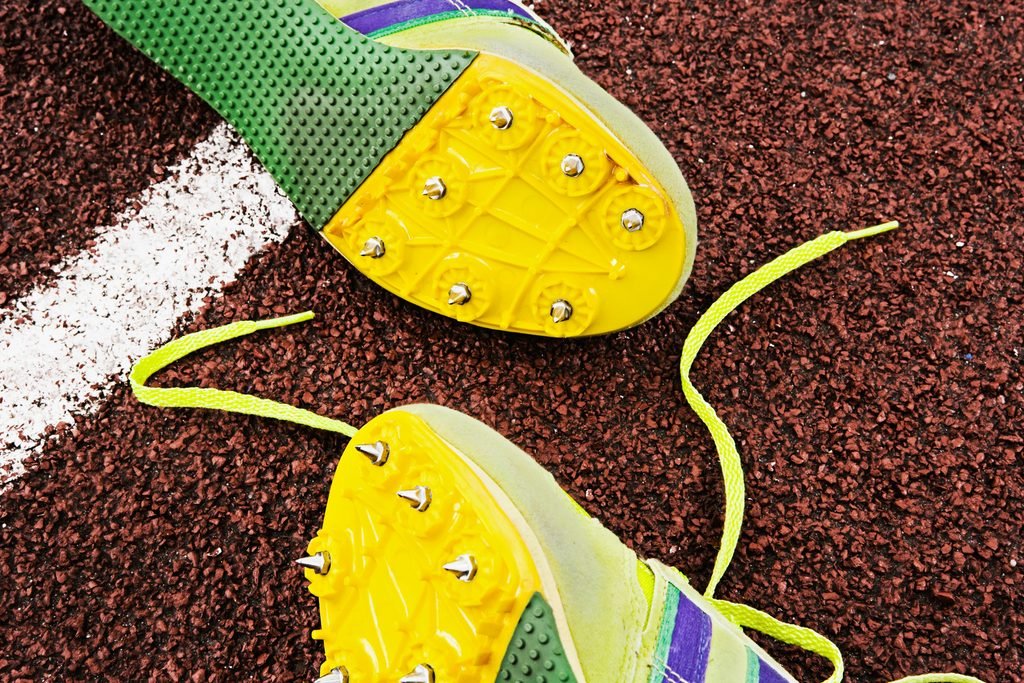
They are designed to handle regular training on surfaces including roads, treadmills, and tracks. Track sneakers can use features such as spikes for better traction and lower weight for speed.
This is particularly important because I do not always need track spikes when running on a track.
I can use running shoes for easy laps, warming up, cooling down, or easy running. World Athletics’ guide to track running recommends gradually introducing spikes because they can place different demands on the legs, particularly the calves.
For me, the message is simple: just because I am running on a track does not mean I have to use track spikes.
How I Pick Women’s Track Sneakers
Rather than leading with brands, prices, or colors, I think about the activities I intend to do in the chosen footwear.
Step 1: Determine the Event
My event is one of my primary considerations.
For 100m to 400m events, I want sprint-specific footwear that prioritizes speed, grip, and responsiveness.
For 800m to 1500m races, I am looking for a pair that can balance speed and comfort, with enough cushioning for multiple laps.
For long-distance races, I keep an eye out for efficiency, comfort, and lightness.
For general workouts, spikes might not be necessary at all. The key principle is to match the gear to the event and not look for a specific track shoe by default.
Step 2: Determine Whether I Need Spikes at All
As a newcomer to the sport, I would not automatically purchase spikes and use them for the majority of my training.
Regular running shoes can handle easy workouts, warm-ups, cooldowns, and some interval sessions. Even World Athletics’ track guide for beginners notes that beginners do not need specialist spikes for their first track sessions.
Spikes become useful for specific types of training and competition where I need additional traction.
It is better to make a slow transition rather than trying to run everything in spikes from day one.
Step 3: Differentiate Between Training and Racing Footwear
I do not plan to use the same pair of women’s track shoes for every session.
My everyday trainers can favor comfort and durability, while racing shoes can focus on race-specific performance and lightness.
This approach also prevents me from ruining racing equipment during warm-ups and other types of training.

Step 4: Pay Attention to the Fit
A well-fitted pair of track sneakers will allow me to engage in intense activities without constantly worrying about my shoes. Technology is not useful if the shoe does not fit well.
Here are the characteristics I value during a trial:
- The heel should provide a solid grip without slipping.
- The midfoot should not allow my foot to slide inside the shoe.
- My toes should not be hurt or compressed.
- The upper should hold my foot properly.
- I should not feel rubbing or uncomfortable pressure points.
Although spikes might seem less comfortable than regular shoes, their purpose is to provide a secure performance fit. The fit may seem narrow, but it should not be painfully tight.
Step 5: Test Them Before Competition
I don’t believe race day is when I should first be properly running in new track shoes.
I like to start with short repetitions and check comfort, traction, how my calves are reacting, and whether the shoes feel secure at speed.
If everything feels good, I can gradually work up to more.
It helps my body get used to shoes that may feel completely different from my normal everyday trainers.
What Actually Matters in Women’s Track Shoes?
Various technologies are touted by shoe companies, but I like to focus on characteristics that actually matter for track shoes.
Traction
Traction becomes especially important when accelerating and running fast around the track.
Spike pins can offer extra grip, and outsole design can influence how secure the shoe feels on the track surface.
Sprint footwear generally focuses on aggressive traction because of the demands of short, fast events.
Cushioning
It’s not always the case that more cushioning is better.
For shorter sprints, I might value direct ground contact, traction, and responsiveness over a heavily cushioned sole.
However, cushioning becomes more important as distance increases.
Research involving competitive female distance runners and track spikes identified biomechanical differences between advanced-technology and traditional spikes, including differences in plantar pressure.
This is another reason I would not use the same criteria for sprint and distance footwear.
Weight
Track shoes are generally light since I don’t want unnecessary weight on my feet during competition.
However, I would never select a shoe based solely on how light it is.
Sacrificing fit or choosing inappropriate footwear for a particular event is not worth saving a tiny amount of weight.
Stiffness
Various modern racing shoes use stiff plates to alter the shoe’s behavior while running.
But I don’t automatically assume that the stiffest shoe will make me the fastest.
Research comparing foam-only and carbon-plated track spikes found that adding a carbon plate did not automatically improve running economy. Shoe stiffness, geometry, running speed, and the individual athlete all matter.
This means I’m looking at the shoe as a whole rather than choosing based on one material.
My Track Shoe Strategy for Different Workouts
Rather than finding one shoe to rule them all, I like to think about what different workouts need.
When I’m doing easy running or warming up, comfort and cushioning are my priority, and a regular running shoe is frequently the best option.
I might use a light training shoe or work up to event-specific footwear for interval sessions.
For race-specific workouts, I occasionally use competition shoes so I can get familiar with their stiffness and grip.
When it comes to competition, I use event-appropriate footwear that I’ve already tested.
I don’t need my most aggressive track shoes to do everything I do.
Training Strategy: Introduce Track Shoes Gradually
Specialized footwear can have a significant effect on how running feels, especially around the foot, ankle, and lower leg.
That’s why I avoid suddenly switching from cushioned trainers to regular spike sessions.
I can start by wearing spikes for a small part of a speed session and work up to doing more if my body tolerates it well.
I continue to do much of my general conditioning in appropriate training shoes.
The point isn’t to spend as much time as possible in spikes. It is to use them when they serve a useful event-specific purpose.
Nutrition and Recovery for Track Training
The shoes on my feet are only part of the equation.
Hard sprints, intervals, and distance runs still need proper recovery. I need enough food and nutrition to support my training instead of relying on shoe technology to compensate for poor recovery.
Carbohydrates are an important fuel source for moderate- to high-intensity exercise, and enough protein can support muscle repair and adaptation.
Sleep matters too.
If I am constantly training and not properly recovering, swapping my sneakers is probably not going to solve the problem.
This aligns with the larger FitEvidenceLab approach: shoe technology can support my performance, but consistent training, nutrition, and recovery remain foundational.
Track Shoe Choices That Can Hold Me Back
1. Buying Sprint Spikes for All My Track Workouts
Sprint spikes are a specific performance tool. Putting them on just because I am on the track misses the point.
Better approach: I choose the shoe based on my event and the purpose of my workout.
2. Choosing Based on Colors and Designs
Colors and designs are easy to compare, but they don’t give me much useful information.
Better approach: I identify my needs by event and purpose before looking at appearance.
3. Assuming More Carbon Automatically Equals Faster
Advanced technology can help with certain activities, particularly distance running, but each shoe behaves differently.
Better approach: I consider the entire shoe and not just one component.
4. Overlooking Fit
I could have the most technically advanced shoe in the world, but if I am constantly battling blisters or discomfort, it is not worth it.
Better approach: I seek out a good fit alongside performance and technology.
5. Wearing New Spikes for the First Time on Race Day
Race day is not the time to discover that my shoe rubs my heel or places unfamiliar stress on my legs.
Better approach: I wear new competition footwear during appropriate training sessions first.
6. Assuming One Pair Is Suitable for Every Event
Sprinters and distance runners have very different footwear needs.
Better approach: I choose footwear based on my event rather than trying to make one shoe do everything.
Signs My Track Shoes Are Doing Their Job
I don’t judge a pair of women’s track sneakers based only on how fast they feel during the first few miles.
I use several criteria.
Comfort: I don’t want blisters, rubbing, or hot spots.
Fit: My heel and midfoot should stay locked in place without too much movement.
Traction: I should feel confident accelerating and turning at the speeds required for my event.
Performance: My footwear should be appropriate for the movements and speeds of my event.
Recovery: I keep an eye on how my feet and legs respond after introducing specialized footwear.
Consistency: Most importantly, my shoes should not distract me from my training.
Judging these areas gives me a much better indication of a good pair of women’s track sneakers than simply feeling like I could run a personal best straight out of the box.
My Final “Boring’’ Thoughts
The best women’s track sneakers aren’t always the lightest pair of shoes, the most expensive spikes, or the latest technology available.
I start with my needs: my event, what my training calls for, my own skill level, and how the shoe fits.
For sprinting, I am more concerned with grip and responsiveness. As I move toward distance events, cushioning and efficiency become more important.
I don’t always prioritize competition footwear for everyday running on the track.
As track footwear technology advances, especially for distance runners, I want to stay aware of how my own body responds instead of getting caught up in chasing the newest feature.
My approach to women’s track sneakers is simple: choose footwear for the task at hand, get a good fit, ease into specialized footwear, and use performance technology as an addition to good training, not the other way around.
